
Single, Double and Triple Pleats, and How to Choose Between Them
Pinch pleat is the heading most people picture when they picture curtains. It has been the benchmark in traditional interiors for well over a century, and it is still the heading we are asked for most often — partly because it suits so many rooms, and partly because it is the one that looks unmistakably made rather than bought.
You will see it called a French pleat, and in the workroom you will hear the variations described by the number of folds in the hand: a two-finger or three-finger pleat. Double and triple pinch pleat mean the same thing. If you have been quoted for a French pleat, you have been quoted for this heading, and the question left is how many folds are in each pleat and how much fabric goes into them.
That second question is the one almost nobody asks, and it is the one that decides whether the finished curtain looks like the photograph you had in mind. This guide covers how the heading is built, what separates the versions, where the cost actually sits, and the situations where we would point you somewhere else. If you would rather see the whole range side by side than one heading in depth, our guide to curtain headings and heading styles covers the wider set.
The pleat is made, not bought. That is the difference between this heading and most others.
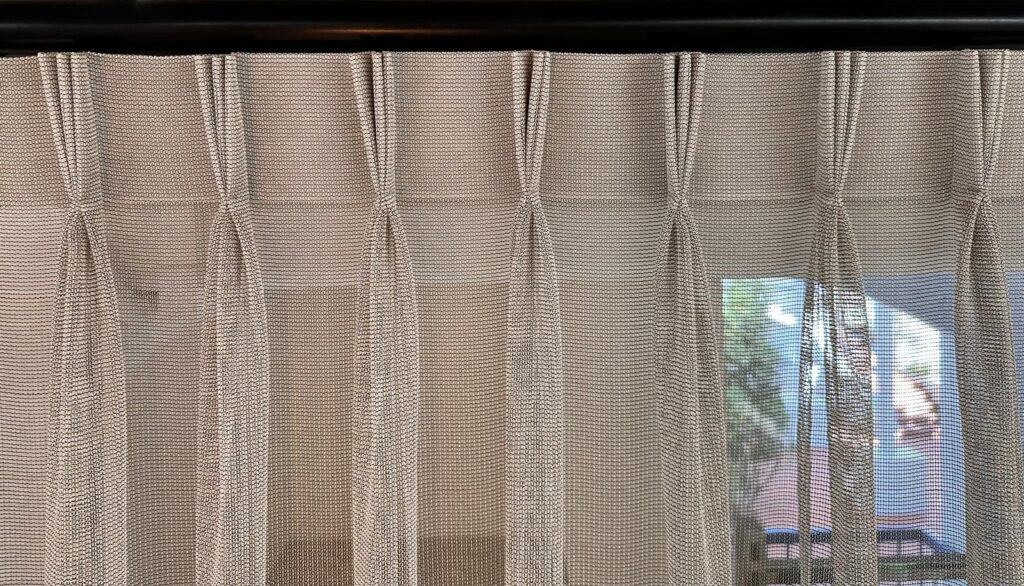
A stiffener called buckram is sewn into the top of the curtain to give the heading structure. The fabric is then gathered into groups, and each group is stitched at its base so the folds fan out above the stitch and fall into clean vertical lines below it. Between each pleat sits a flat space, and it is the rhythm of pleat and space across the width that gives the heading its order.
We set a pleat every 10cm along the track. That spacing is what keeps the rhythm even across a wide window, and it is the figure the rest of this page depends on.
The curtain hangs on hooks, which drop either into rings on a decorative rod or into gliders on a track. Because the hook sits a little below the top edge, the heading stands proud of the hardware rather than beneath it — the opposite of an s-wave, and the reason a pinch pleat sits so comfortably under a pelmet or behind swags.
Triple pleat – Three folds per pleat, cut at 2.5 times the track width. The fullest and the most formal. In heavier cloth — velvet, wool, weighted silk, heavy linen — the depth of a triple pleat is what makes the curtain look considered rather than merely thick. In a formal dining room or a period house with the ceiling height to carry it, nothing else quite does the same job. It stacks deeper when the curtains are drawn back, which is worth allowing for on a window where you want the glass exposed during the day.
Double pleat – Two folds per pleat, cut at 2.2 fullness, and the heading we specify most often. It carries enough fullness to look generous without becoming heavy, works across almost every fabric weight from mid-weight linen to velvet, and sits as comfortably in a contemporary room as a traditional one. If the room does not demand something specific and you are not sure, this is the one. It is the heading that disappoints least.
Single pleat – One fold per pleat, cut at 1.7 fullness, and used mostly for linings rather than for the curtain you see. There is no purpose in gathering a lining as fully as its face fabric: the extra cloth adds weight without ever being visible, and it makes the stack deeper when the curtains are open. A single pleat gives the lining just enough structure to hang correctly behind a fuller heading and no more. It is occasionally used on a main curtain, but rarely — and not as a way of economising on a curtain you want to look full.
Every pleat consumes fabric. How much it consumes is decided in the workroom, it is invisible in a finished photograph, and it is almost never written into a quote — which makes it the most useful thing you can ask about when you are comparing prices.
We take a minimum of 15cm of fabric into each pleat on a triple, and a minimum of 12cm on a double. A good many workrooms cap the triple at 13cm and the double at 10cm.
Two centimetres per pleat sounds like nothing. It is not. At a pleat every 10cm, a four-metre track carries forty pleats — so two centimetres each is eighty centimetres of extra fabric across that one window. Most of a metre, and all of it going into depth at the top of the curtain.
The difference is visible from across the room. A pleat made at 15cm stands out from the fabric and throws a shadow down its own fold. A pleat made at 13cm sits flatter against the curtain and reads as a crease rather than a fold. Both are honestly described as a triple pinch pleat. They do not look the same, and once the curtains are hanging there is nothing to be done about it.
Overall fullness compounds it. Pleat depth and fullness ratio are two separate decisions — how much fabric goes into each pleat, and how much fabric there is in total — and a curtain can be generous on one and mean on the other.
This is why two quotes for the same fabric, the same window and the same heading can differ considerably and both be honest. The difference is often sitting entirely in measurements nobody has put in writing. It is a fair question to ask of anyone quoting you, ourselves included: how much fabric goes into each pleat, and what fullness is the curtain cut to?

Traditional and period homes – The heading has the structure to sit inside deep skirtings, picture rails and ornate cornices without arguing with them. In a federation or Victorian house it is very often the only heading that looks native to the room.
Formal rooms – Dining rooms, drawing rooms, main bedrooms — anywhere the window is meant to look dressed rather than merely covered. A triple pleat in a good weighted fabric is about as considered as a window gets.
Under a pelmet or swags – Because the heading stands proud of the track and gathers into vertical folds, it sits beautifully beneath a board or a swag and tail treatment, where a wave heading would be cut off at exactly the point that makes it a wave.
Where trims are wanted – The vertical folds give a contrast leading edge, a braid or a fringe somewhere to sit. It is the heading that takes decoration best.
Where hardware is being reused – Worth knowing that this cuts the opposite way to s-wave. A pinch pleat hangs on standard hooks, so it will go onto most existing tracks and rods. If you are keeping hardware you like, this heading gives you the most freedom — though it is worth checking the track carries the weight of a lined curtain.
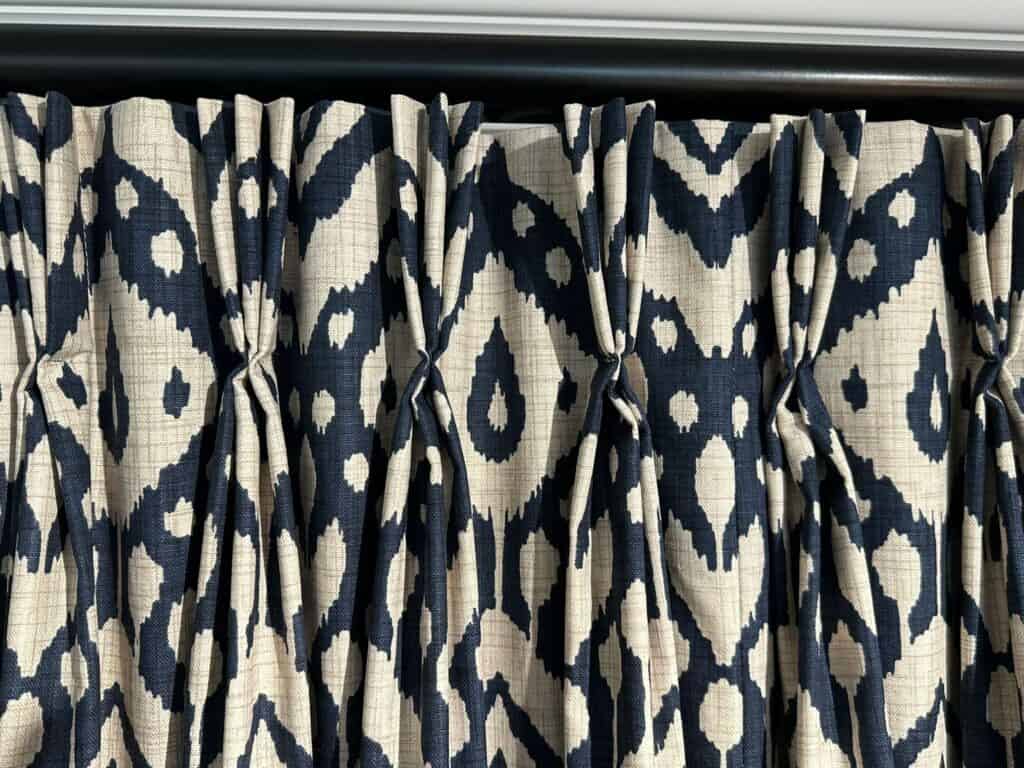
The fabric has a large repeat – This is the one that catches people out. The pleats consume fabric at the top of the curtain, so a bold pattern with a wide repeat gets interrupted along the heading and can end up looking chopped rather than continuous. Plains, textures and small repeats are safer. If you have chosen a large-scale print and you love it, it is usually better spent on a Roman blind, a pelmet or a cushion than fought into a pleat.
The house is genuinely modern – Pinch pleat reads as traditional even in a plain contemporary fabric, and in a room of clean lines, no trim and floor-to-ceiling glass it will look like a decision made against the architecture. That is s-wave territory, and there is no point resisting it.
Pinch pleat is forgiving across weights, which is part of why it has lasted. Mid-weights take a double; the heavier cloths are where a triple earns its cost. What it does not tolerate well is a fabric with no body at all — a very limp cloth will not hold the fold at the base of the pleat, and the heading loses its definition. Our curtain fabrics page covers weight and drape, and it is worth handling a sample hanging rather than flat on a table.
Lining changes the pleat as much as it changes the drape. A lined and interlined curtain has the mass to hold a deep, sculptural fold; an unlined one keeps a lighter, softer line. Neither is more correct, but interlining is what makes a triple pleat look like the photograph you had in mind.
If you are choosing between headings rather than deciding on one, the headings and styles guide sets them out together. If you have settled on pinch pleat and are weighing double against triple, bring the window measurements and a photograph of the room — the ceiling height and the trim usually answer the question faster than any description can.
If you are weighing pinch pleat against pencil pleat specifically, we compare the two directly — on cost, stacking and which suits which room.
We sew every curtain in our Nedlands workroom and fit curtains and blinds across Perth, and the fabric range is on the wall to be handled rather than described.
The number of folds gathered into each pleat. A triple is cut at 2.5 times the track width and a double at 2.2, so a triple is fuller, more formal and uses more fabric. A single, at 1.7, is used mainly for linings rather than for the curtain you see.
Yes. French pleat is the older term and pinch pleat is the more common one in Australia, but they describe the same heading. You may also hear the versions called two-finger and three-finger pleats.
More than most people realise, and it is worth asking. We take a minimum of 15cm into each pleat on a triple and 12cm on a double, where a number of workrooms work to 13cm and 10cm. That extra fabric is what gives the pleat depth and shadow rather than letting it sit flat against the curtain, and it is not something you can see in a quote or correct afterwards.
Triple. Heavy cloth needs three folds to hold its shape, and it is the depth of the pleat that makes a velvet or a wool curtain look considered rather than merely bulky.
Usually, yes. The curtain hangs on standard hooks that drop into rings on a rod or gliders on a track, so it is one of the more adaptable headings if you are keeping hardware. Check that the track carries the weight of a lined curtain before committing.
No, though the fullness has moved. A triple pleat in heavy fabric reads as traditional because that is what it is for. A double pleat in a plain linen sits comfortably in a contemporary room. The heading is not dated; over-dressing it is.