

Plantation shutters are indoor window shutters — fitted inside the window reveal or frame, not mounted outside the house. They are a popular, enduring window treatment: clean-lined, hard-wearing and equally at home in contemporary and traditional interiors. Their adjustable louvres give excellent control over light, ventilation and privacy, and as a fixed, fitted treatment they suit many Perth windows where a tidy, architectural look is wanted. We supply and install internal shutters only — not external roller shutters, security shutters or insulation shutters, which are a different product from a different trade.
At Hay Interiors we supply and install quality plantation shutters, custom made to your windows. To be straightforward, as we are across our range: shutters are not made in our Nedlands workroom — they’re manufactured to our specification and imported, then expertly measured and professionally installed by us. What we add is honest, expert advice on whether shutters are the right choice for a given window, and how they sit alongside the curtains and blinds we make.
Plantation shutters are one of the most enduring window treatment choices for good reason. Their adjustable louvres give you precise, independent control over light, airflow and privacy — you can angle them to let in a breeze while blocking direct sun, or close them completely for darkness and seclusion. That level of control, without needing to raise or lower anything, is something no blind or curtain quite replicates.
As a fixed, fitted treatment, shutters bring a sense of permanence and architectural integrity to a room. They become part of the fabric of the space rather than something hung in front of it — which is why they suit rooms. Bathrooms, kitchens, laundries and casual living areas are natural fits, where the low-maintenance, moisture-resistant qualities of quality shutters are a genuine practical advantage over fabric alternatives.
Shutters are also remarkably low-maintenance once installed. There are no fabrics to fade, no linings to deteriorate and no dry-cleaning required — a wipe-down keeps them looking fresh for years. For busy households, holiday homes or investment properties, that ease of upkeep has real appeal. And because they are a fitted, architectural addition rather than something hung in front of the window, quality timber and composite shutters read as part of the house — which is why they show well to buyers and why owners of investment and holiday properties choose them so often.
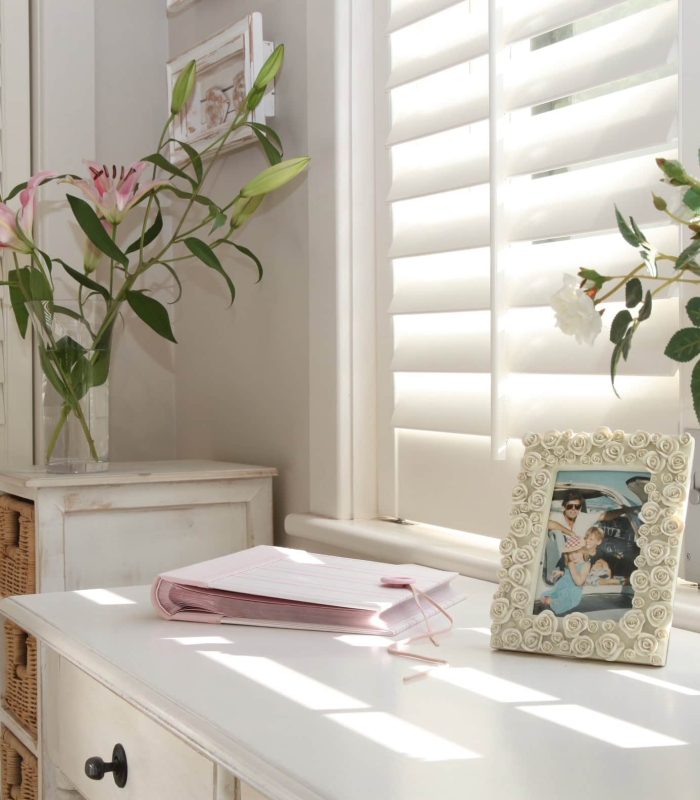
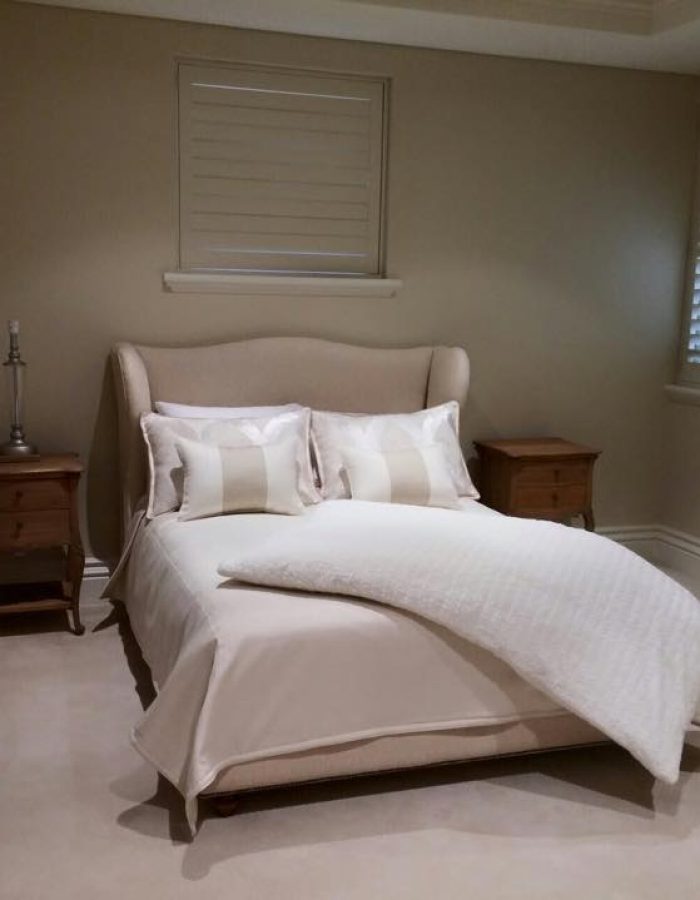
Shutters come in several materials, each with distinct practical advantages. Painted timber shutters bring warmth and a classic look, but require more care in high-moisture environments. Durable composite shutters offer the appearance of timber with greater resistance to humidity, warping and salt air — well suited to Perth’s coastal climate and wet areas. PVC shutters are the most moisture-resistant option, ideal for bathrooms, laundries and pool surrounds. Each comes in a range of colours and finishes, most of which can be matched or complemented to your interior palette.
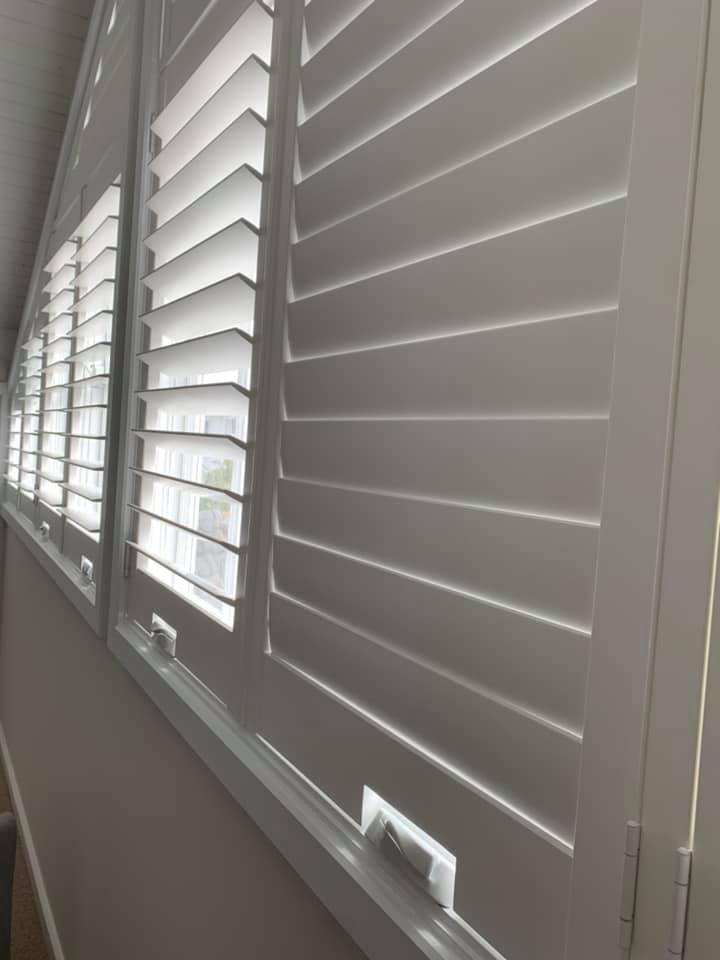
Louvre sizes affect both appearance and function. Wider louvres (89mm or 114mm) give a more contemporary, open feel and a clearer view when angled; narrower louvres (63mm) suit traditional and heritage interiors and give slightly finer privacy control. Painted timber shutters suit formal rooms and period homes, while wooden shutters in a stained finish bring warmth to casual living spaces — the material and the louvre width are usually chosen together, because a wide louvre in a heavy timber reads very differently to the same width in a slimline composite.
Sliding doors, bi-folds and tall openings. Shutters are not limited to standard windows. Sliding door shutters run on a track in front of the opening and stack to one side, which suits wide glass where hinged panels would be impractical. Bi-fold shutter panels fold back concertina-style against the reveal, useful where you want the whole opening clear. Tier-on-tier configurations split the shutter horizontally so the top and bottom halves open independently — the top angled for light, the bottom closed for privacy, which works particularly well on street-facing windows. Full-height hinged panels remain the most common choice, and cafe-style half-height shutters suit kitchens and bathrooms where only the lower portion needs covering.
Because we make curtains and blinds as well as supply shutters, we give genuinely impartial advice — something a shutter-only retailer simply cannot offer. Shutters are superb in certain settings: wet areas where fabric treatments are impractical, rooms wanting a permanent, architectural look, or windows where ventilation and light control need to work independently of each other. They add a sense of permanence and solidity that soft treatments don’t, and they’re particularly low-maintenance once installed.
That said, there are windows and rooms where shutters aren’t the best answer. Rooms needing acoustic insulation benefit far more from our acoustic curtains than from shutters, which offer very little sound reduction. Bedrooms where complete darkness is a priority are often better served by blockout curtains with proper returns and overlaps. Living areas wanting softness, warmth and texture — especially in heritage or character homes — usually feel more complete with well-chosen curtains or Roman blinds than with shutters alone. In a Federation or Edwardian room the louvre line can also sit awkwardly against original architraves and picture rails, which is a proportion judgement rather than a product one — our curtains for heritage homes page covers how Annie approaches those windows.
Many homes use a combination: shutters in wet areas, utility rooms and casual spaces; soft furnishings in living and sleeping areas. Annie will always advise honestly on which treatment suits which window — and if shutters aren’t the right answer for a particular room, she’ll say so and explain why. That approach has earned long-term trust with Claremont, Dalkeith, Cottesloe and Peppermint Grove clients who return to us precisely because they know the advice is genuine, and it holds across every suburb we cover — see all the Perth suburbs we serve.
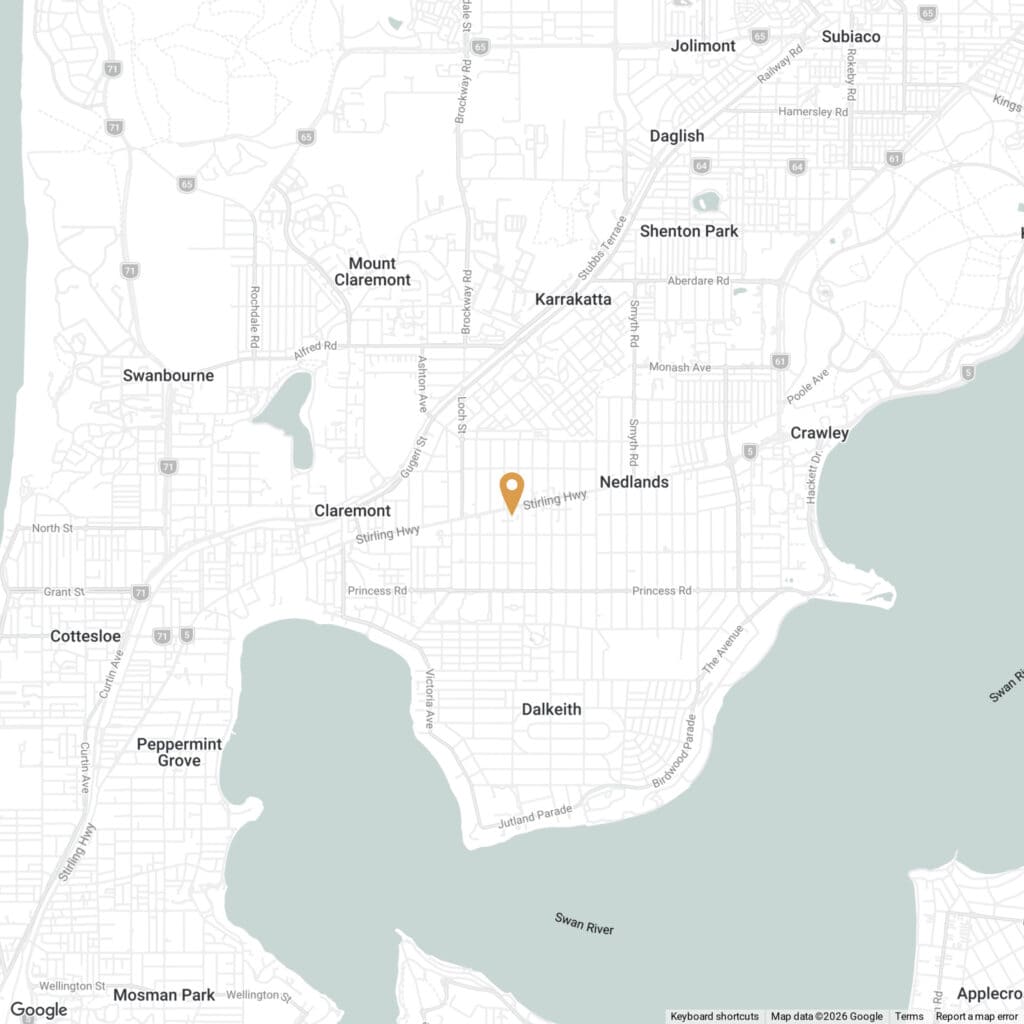
Visit our showroom and workroom in Nedlands to see shutters alongside our curtain and blind ranges — comparing them in person is the best way to make a confident choice.
The best way to begin is to visit our showroom in Nedlands. You can explore hundreds of fabric samples in natural light, see finished examples, and often watch work happening in the attached workroom. Annie or a member of the team is always happy to talk through possibilities and answer questions.
Alternatively, we can arrange an in-home consultation at a time that suits you. This has the advantage of enabling us to consider your actual windows and provide advice on the best window dressings for your space.
Either way, you will receive honest, expert guidance focused entirely on what is right for your windows and your home.
We look forward to helping you create window furnishings you will love for many years to come.
Shutters are made to our specification and imported, then expertly measured and professionally installed by us. Our curtains and Roman blinds are the items made in our own Nedlands workroom.
For bathrooms, kitchens and other high-moisture areas, durable composite or PVC shutters generally outperform timber. Annie advises on the right material for each room and Perth’s conditions.
Neither is universally better — it depends on the room. Shutters excel for clean lines, ventilation and wet areas; curtains and blinds offer softness, warmth and acoustic and decorative options. Because we offer all of them, our advice is impartial.
No. We supply indoor shutters only — internal plantation shutters fitted to the inside of your windows. External roller shutters, security shutters and insulation shutters are a different product and a different trade, and we don’t install them.
Yes. Sliding shutter panels run on a track and stack to one side, and bi-fold panels fold back against the reveal. Both are common on wide glass and patio doors where hinged panels would block the opening. Annie measures the opening and advises which configuration suits the space and the way you use the room.