
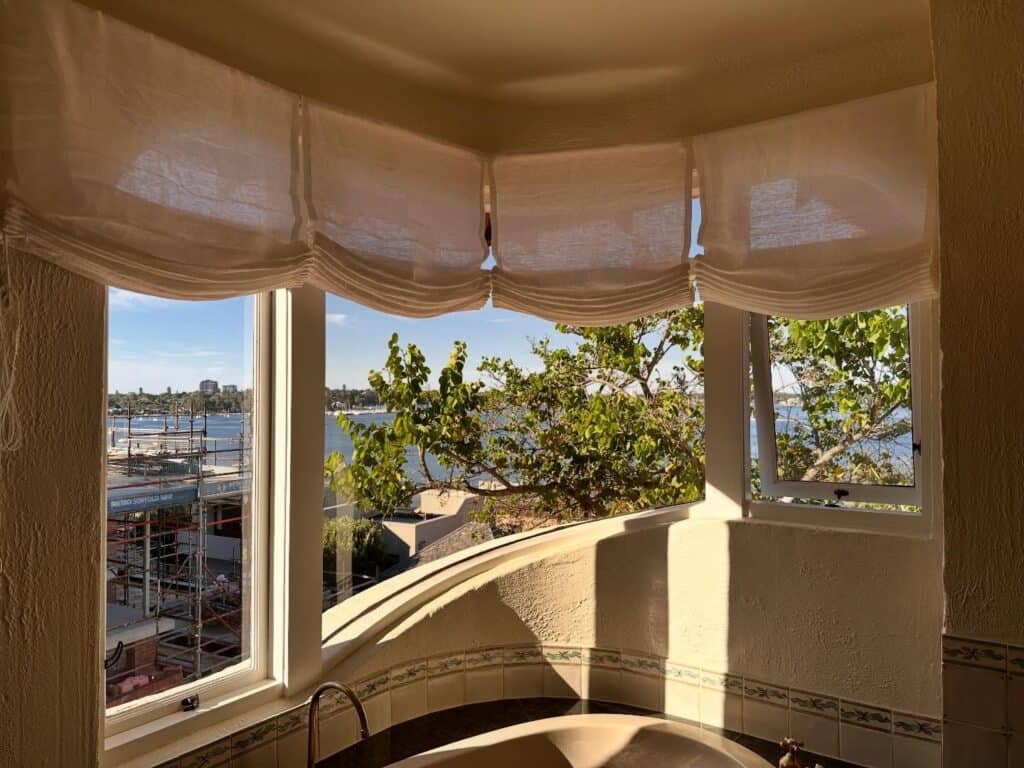
A relaxed Roman blind is flat through its upper body with a permanent gentle swag along the bottom edge — the “smile” that gives the style its name. The rods that hold each fold rigid in a classic Roman are not inserted, so the fabric forms a soft loop rather than a crisp horizontal line.
What distinguishes ours is that the swag is locked in. Annie builds permanent folds into the hem so the curve holds its shape wherever the blind sits — fully lowered, half raised, or anywhere between. A relaxed Roman made without that step loses its curve as soon as it comes down, which is the most common way the style disappoints.
At Hay Interiors we make relaxed Romans properly in our Nedlands workroom from quality curtain fabrics, so the curve falls naturally and holds its shape over time. Because we use real curtain fabrics rather than stiff roller materials, the swag has genuine softness and movement — the quality that makes the style worth choosing over a simplified version.
Annie often guides clients toward a relaxed Roman when the classic flat fold feels too formal but they still want a tailored fabric blind. The style suits:
It pairs naturally with sheer curtains in front for daytime privacy, and light-filtering or blockout linings can be added for privacy and light control. The blind looks as good raised as lowered — which is the mark of a well-made Roman in any style.
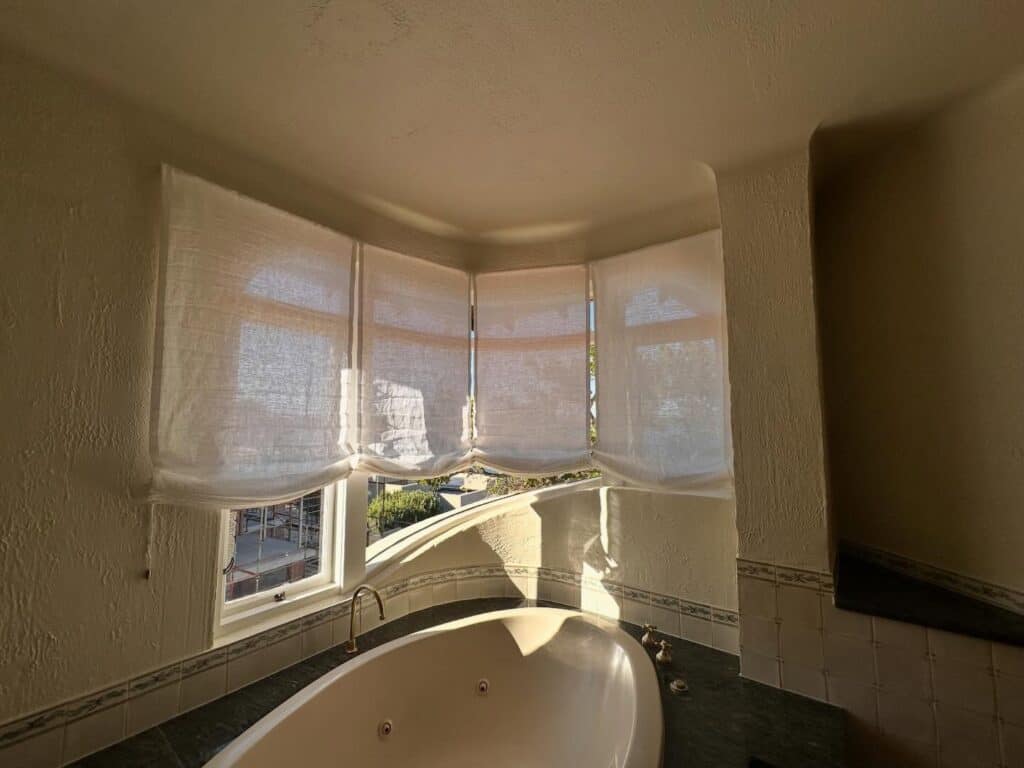
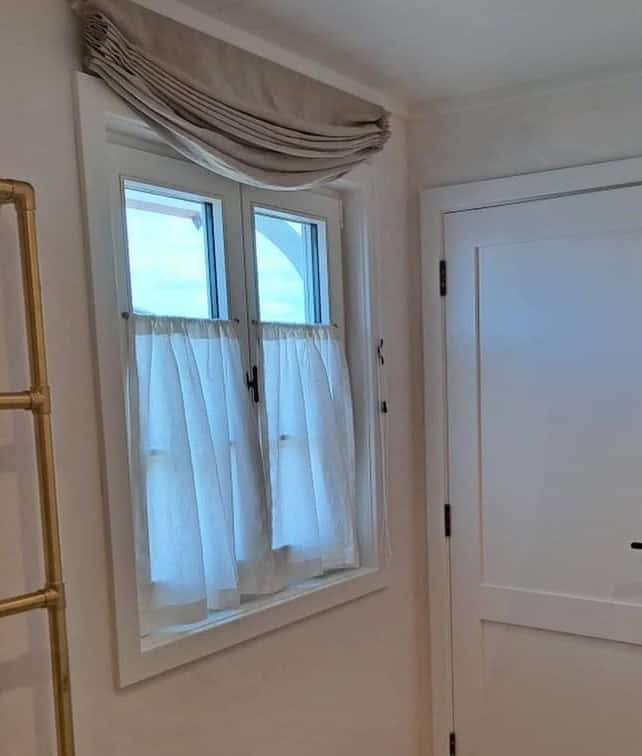
The relaxed Roman is frequently confused with the soft Roman blinds, but they are genuinely different treatments and Annie regards them as such. A relaxed Roman has one curved swag specifically at the hem, created by side-only cording — the rest of the blind is relatively flat. A soft Roman omits the rigid horizontal rods across the full blind, so the fabric falls into gentle rounded folds from top to bottom.
The relaxed Roman has a single distinctive feature at the base; the soft Roman has an all-over softness throughout its length. In the right room, each produces a beautiful result — but they suit different windows, different fabrics and different aesthetics. Annie will show you both and explain which would look better in your specific space.
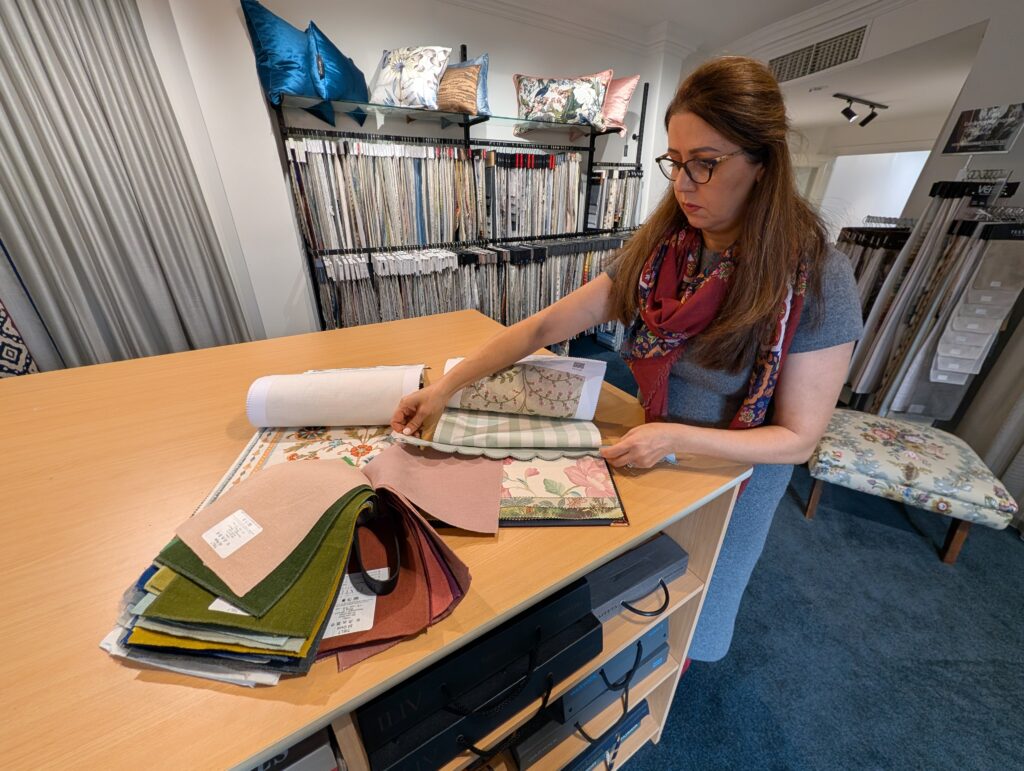
Because we make relaxed Romans from real curtain fabrics, the choice of material is wide — linens, cottons, textured weaves and lighter velvets all drape softly into a lovely curved hem. Heavier or stiffer fabrics don’t suit this style as well, and Annie advises on suitability during your consultation. Light-filtering linings work well with this style. A blockout lining does not — the weight pulls the swag out of shape and the blind loses the soft loop that defines it. If you need full darkness in a room, a classic Roman blind with a blockout lining, or a blockout roller blind behind a decorative treatment, is the better answer.
The style also works well in motorised versions — motorisation suits the side-cord construction naturally, and removes the visual interruption of a cord system on a blind whose whole appeal is its casual elegance.
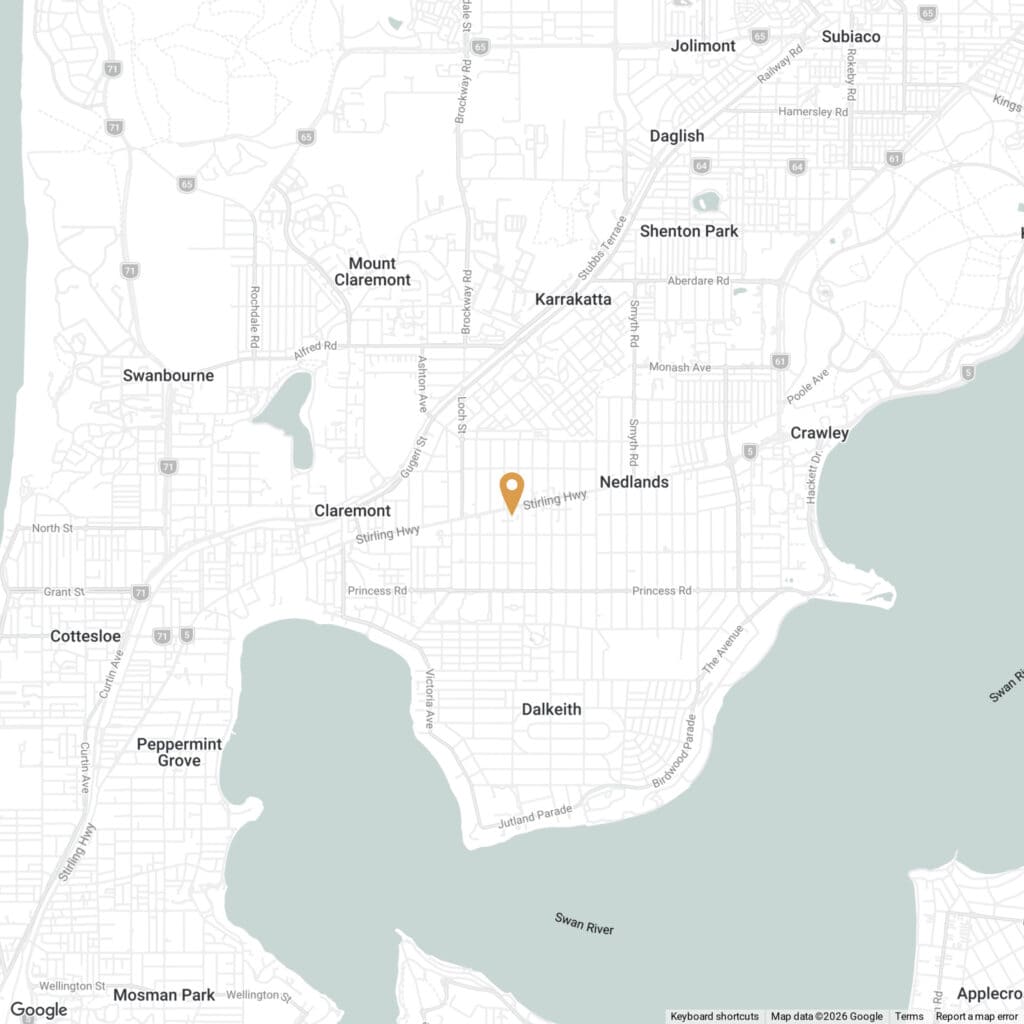
The best way to begin is to visit our showroom in Nedlands. You can explore hundreds of fabric samples, see finished examples, and often watch work happening in the attached workroom. Annie or a member of the team is always happy to talk through possibilities and answer questions.
Alternatively, we can arrange an in-home consultation at a time that suits you. This has the advantage of enabling us to consider your actual windows and provide advice on the best window dressings for your space.
Either way, you will receive honest, expert guidance focused entirely on what is right for your windows and your home.
We look forward to helping you create window furnishings you will love for many years to come.
The cords are fitted only at the sides, so the bottom edge dips into a single soft curve rather than sitting flat. It gives a gentle, informal character while the rest of the blind stays controlled and neat.
No. A relaxed Roman has one curved hem created by side-only cording; a soft Roman has gentle rounded folds across the whole blind with no rigid rods. Annie regards them as genuinely different looks and makes both.
No. The weight of a blockout lining distorts the swag, and the blind loses the soft curve that makes it a relaxed Roman in the first place. For a bedroom needing full darkness we would suggest a classic Roman with a blockout lining, or a blockout roller behind a decorative blind. Annie will talk through the options at your consultation.