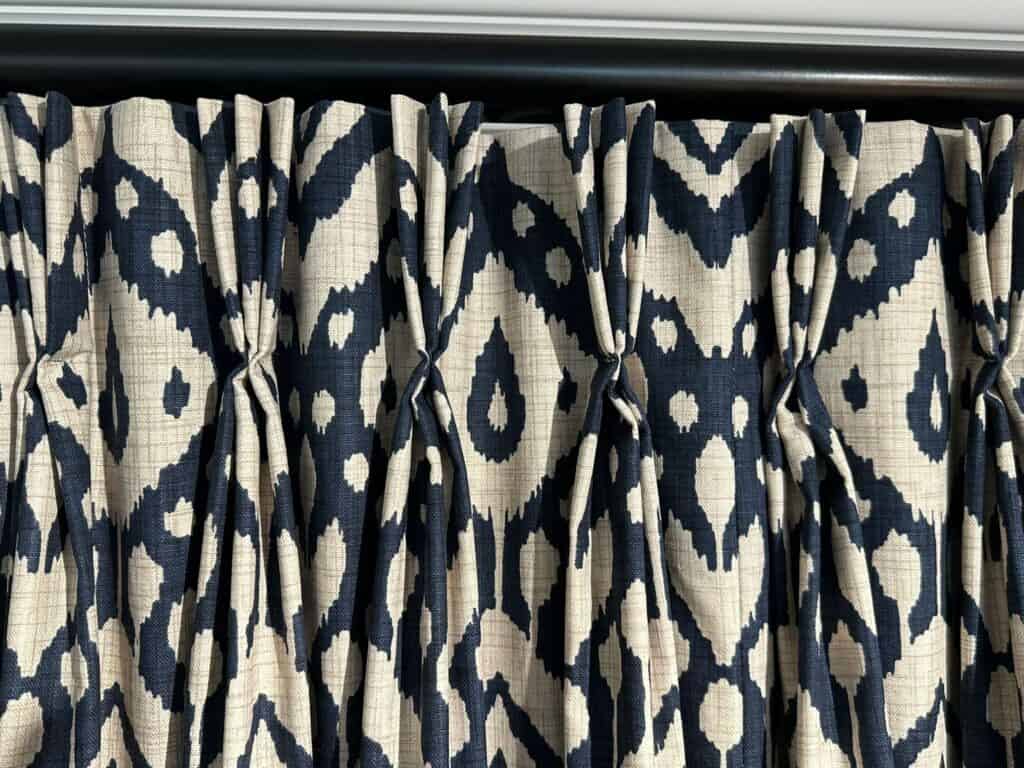
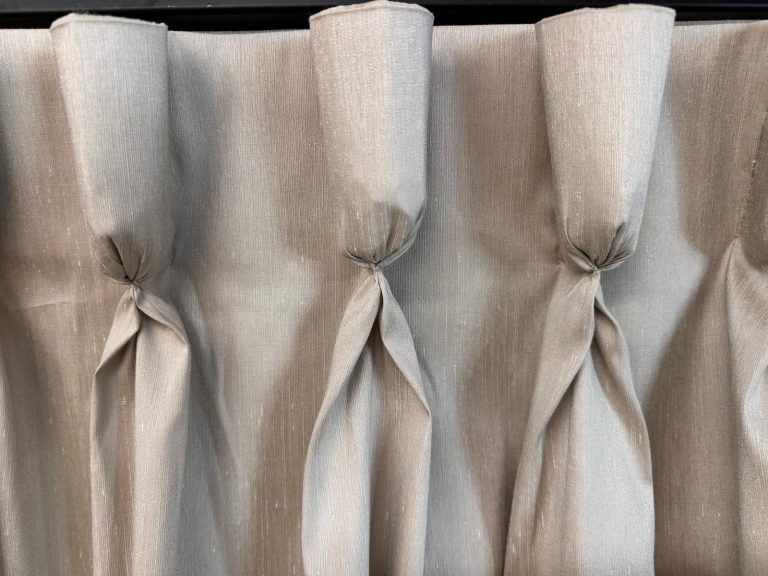
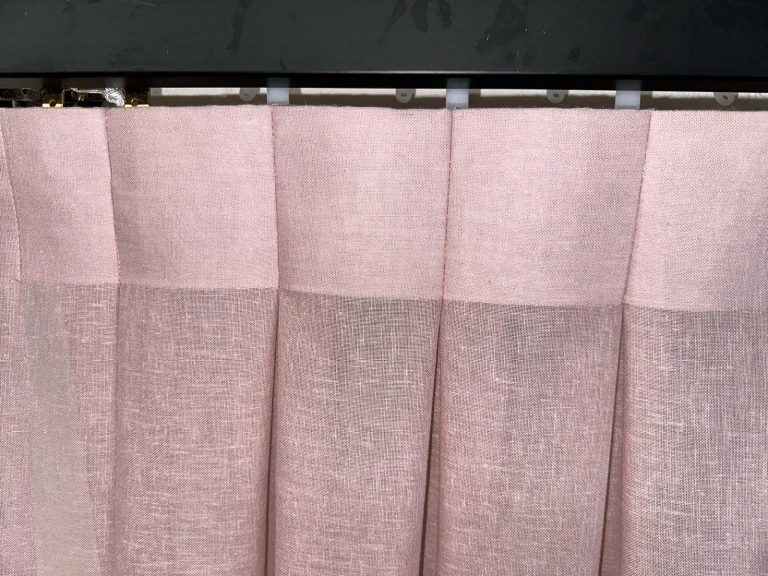
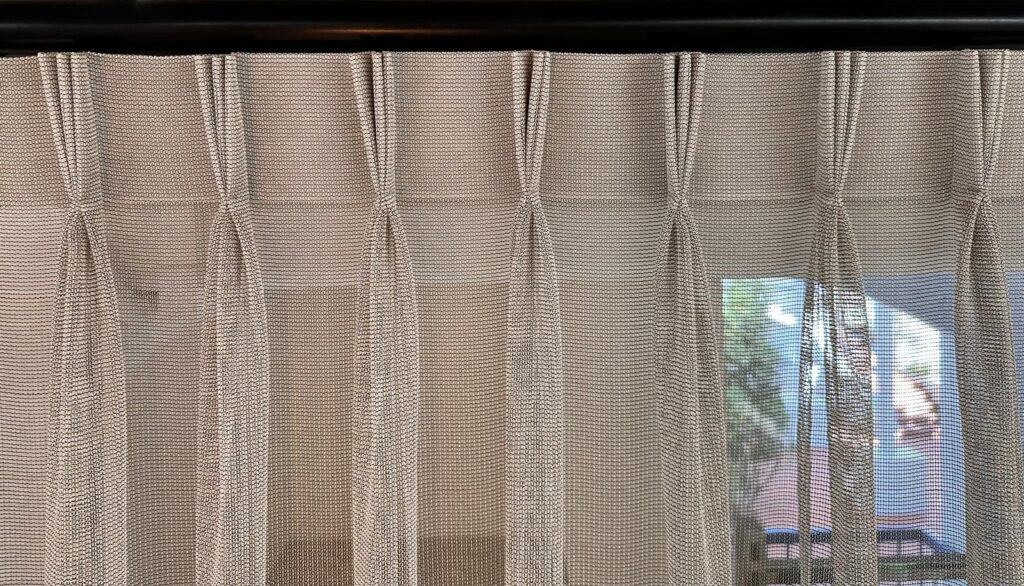
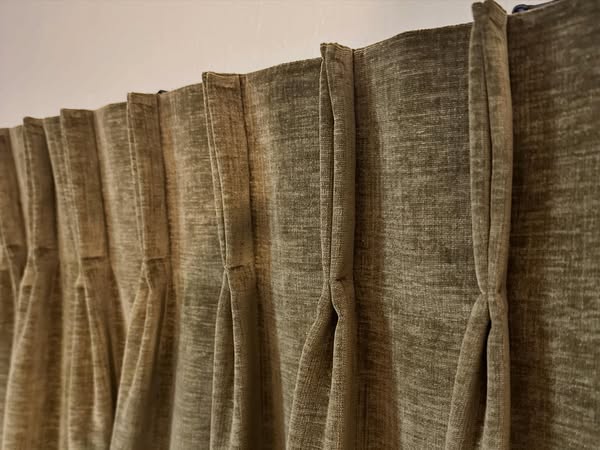
The heading — how the top of the curtain is pleated, gathered or finished — has a profound effect on how curtains look, how they hang, how much fabric they need and how they perform. The right heading can feel relaxed and contemporary or structured and formal, and it influences light control, privacy and the whole aesthetic of the room.
At Hay Interiors we make a full range of premium headings, executed by hand in our Nedlands workroom. Annie explains each option and recommends the heading that best suits your fabric, windows, desired look and practical needs — rather than defaulting to whatever is easiest or most common.
Below we briefly cover the main heading styles.
| Heading | Look | Fullness | Best for |
|---|---|---|---|
| S-wave | Soft continuous waves, no pleats | 2.2 | Contemporary rooms, sheers, motorisation, wide windows |
| Pinch pleat (double) | Tailored, stitched groups of two | 2.2 | Most rooms and most fabrics — the everyday choice |
| Pinch pleat (triple) | Deep, formal, sculptural | 2.5 | Formal rooms, heavy fabrics, period homes |
| Box inverted pleat | Crisp flat panels, pleat folded behind | 2.4-2.5 | Architectural and minimalist interiors, feature windows |
| European pleat | Pleat gathered at the top, relaxed below | 2.2 | Linen and textured fabrics, coastal and designer interiors |
| Tall soldier pleat | Elongated vertical pleats | 2.0 | Tall windows, rooms where height should be emphasised |
| Goblet pleat | Rounded, cupped, decorative | 2.5 | Heritage and formal rooms, largely stationary curtains |
| Pencil pleat | Continuous narrow gather | 3.0 | Matching existing curtains, period accuracy, small windows |
This is where expertise matters most. A heavy velvet may suit a pinch pleat but overwhelm a small window; a light linen sheer often looks best in a soft S-fold. Annie guides you through fullness ratios, how the heading sits on the track or rod, how it looks from outside, and how easy it is to maintain — alongside your curtain fabrics and curtain accessories choices.
Fullness is the ratio between the width of fabric used and the width of the track it covers. It is the number that decides both how a curtain looks and most of what it costs, and it is almost never written into a quote — which makes it a fair question to ask of anyone quoting you, ourselves included.
The heading also determines how the curtains stack back when open — an important consideration for rooms where you want maximum light or an unobstructed view. A well-chosen heading stacks neatly and efficiently; a poorly chosen one leaves bulky fabric blocking part of the window even when fully open. Annie works through these practicalities at the consultation stage, so the finished result functions as well as it looks.
Every heading we make is sewn by hand in Nedlands, for curtains and blinds clients across Perth.
For period properties, the choice of heading is particularly important — a contemporary S-fold can look incongruous in a Federation home, while a goblet or pinch pleat can be exactly right. Annie’s experience with heritage curtains and her English training give her a well-developed instinct for which heading styles suit which eras and architectural proportions. She can also advise on pelmets and swags and tails as complementary treatments for formal period rooms.
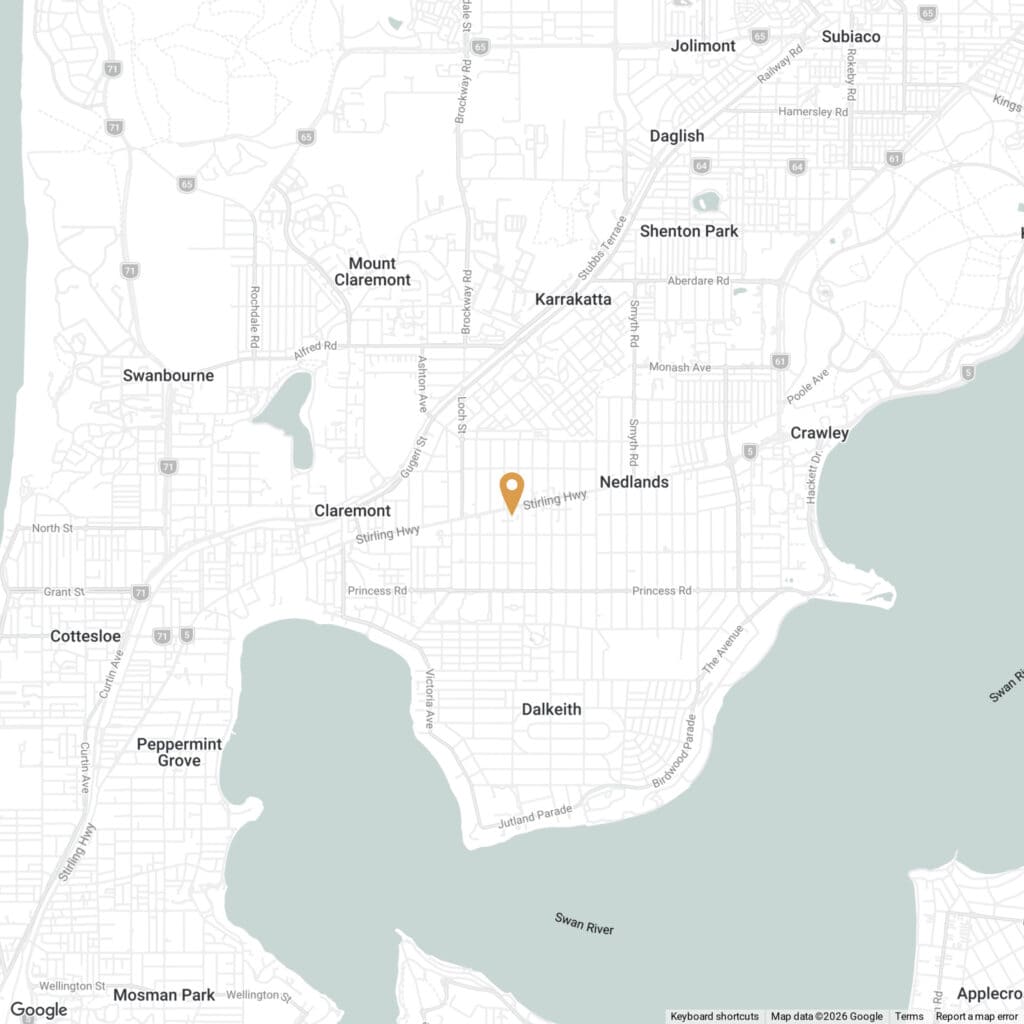
The best way to begin is to visit our showroom in Nedlands. You can explore hundreds of fabric samples in natural light, see finished examples, and often watch work happening in the attached workroom. Annie or a member of the team is always happy to talk through possibilities and answer questions.
Alternatively, we can arrange an in-home consultation at a time that suits you. This has the advantage of enabling us to consider your actual windows and provide advice on the best window dressings for your space.
Either way, you will receive honest, expert guidance focused entirely on what is right for your windows and your home.
We look forward to helping you create window furnishings you will love for many years to come.
S-fold (wave) is very popular in contemporary homes for its clean, flowing look, while pinch pleat remains a timeless choice for a more tailored, traditional feel. The best choice depends on your fabric, window and the character of the room.
Sheers usually look best in a soft S-fold, which lets the fabric fall in even, continuous folds and suits motorisation particularly well. A double pinch pleat is the alternative where a more tailored look is wanted.
Yes, and it is the single biggest driver of cost. We cut S-wave at 2.2 times the track width, a single pinch pleat at 1.7, a double at 2.2 and a triple at 2.5. A pencil pleat needs 3. On a four-metre track the difference between the lightest and the fullest of those is several metres of fabric, so the heading is worth settling before you choose the cloth.