
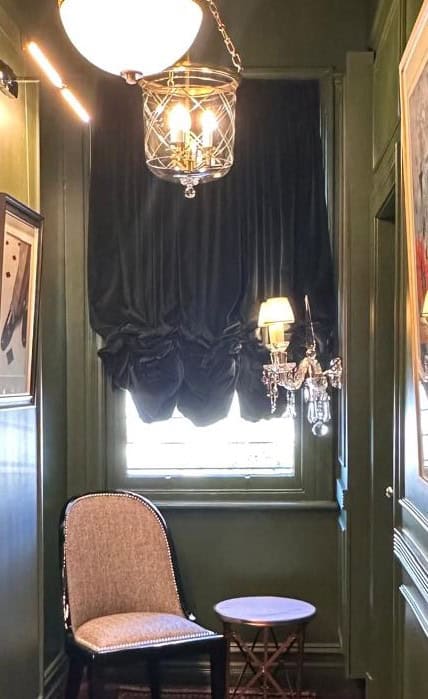
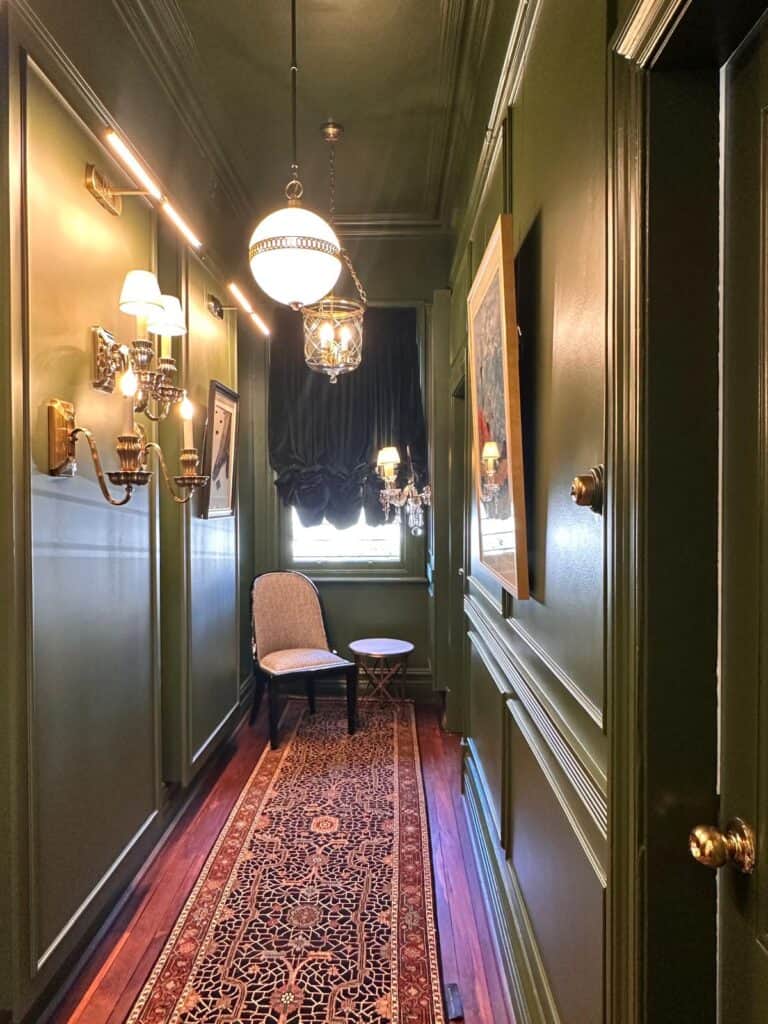
Austrian blinds are a decorative, romantic style defined by scalloped gathers along the lower edge, with the body of the blind falling relatively flat down its length. Raised, or partly raised, they bunch into rich sculptural folds; fully lowered, they settle into a neater surface with the scallops still reading along the hem. It is the most opulent of the Roman family without the full-height ruching of a festoon — an old-world charm that few other window treatments match.
At Hay Interiors we have been making Austrian blinds for decades, in our own Nedlands workroom — a style that demands real experience with fabric manipulation, proportion and finishing, and one that is increasingly rare in Perth. Annie trained in Southampton, England, and has worked on window treatments in heritage houses and museums, including Bagshot Park. That background is why she is comfortable advising on a treatment most Perth makers will not attempt.
Austrian blinds suit formal, traditional and heritage interiors where a statement window treatment is both appropriate and welcome. They work particularly well in:
Unlike curtains, an Austrian blind needs no stacking space either side of the window, so furniture can sit beneath the sill without fouling the treatment. In a period room where the window wall is already committed to a console, a writing desk or a piano, that often settles the decision on its own.
They’re less suited to minimalist or contemporary homes, where a tailored classic Roman blinds or clean roller usually feels more appropriate. Annie will give honest advice on whether an Austrian blind suits your space — and if a simpler style would serve you better, she’ll say so. See our heritage curtains page for more on our period-home speciality.
It is also worth saying that the style is having a revival. The British interiors press has been documenting Austrian and festoon blinds returning to contemporary schemes — usually in plainer, more restrained fabrics than the chintzes they are remembered for. If you like the shape but not the association, that is very much achievable.
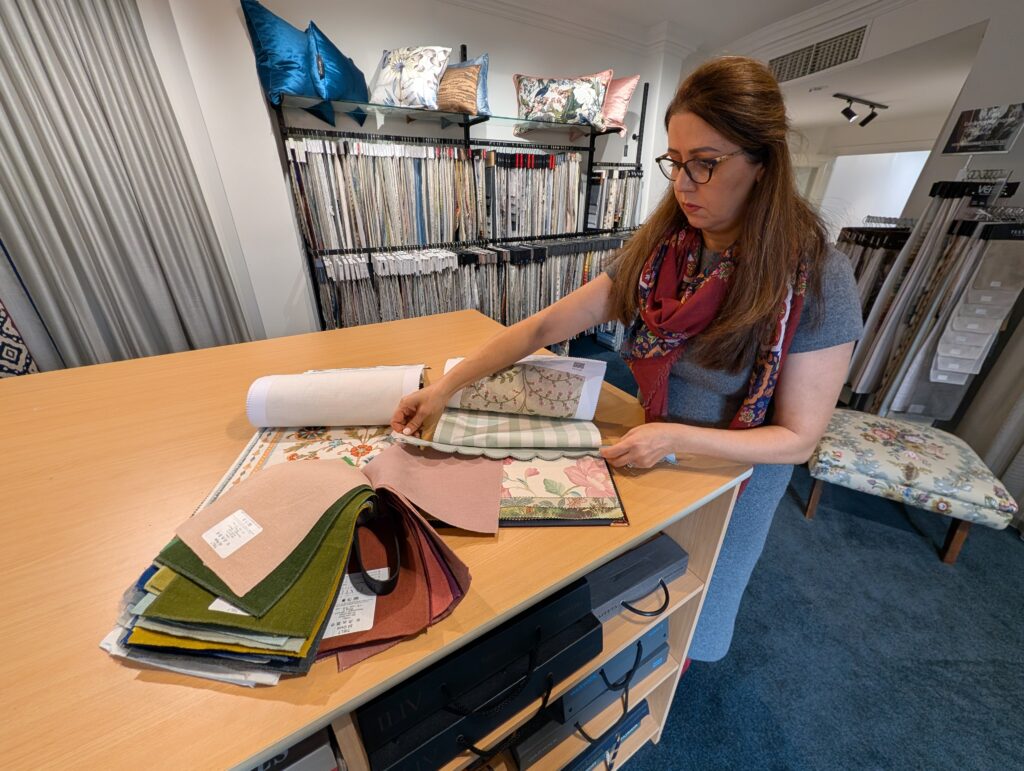
Austrian blinds reward the most beautiful fabrics — silks, velvets, fine linens and damasks all gather and drape magnificently, and the right fabric transforms the treatment from merely decorative to genuinely extraordinary. At the lighter end, silks, organzas and sheers gather into a softer, more filtered version of the same shape — less formal, and often the better choice in a Perth room that already has more light than it needs. Heavier fabrics give drama; lighter ones give movement.
For period properties, Annie can draw on specialist heritage fabrics including classic Victorian-style prints through suppliers such as Slender Morris. Explore our curtain fabrics library for the wider range of options.
Construction involves careful calculation of gathers and scallop proportions for a balanced, symmetrical result — a technical challenge that requires both experience and precision. Because we make them in our workroom, every detail is controlled from pattern-making through to installation. Linings for light control can be incorporated, and the making process is one Annie finds genuinely satisfying — this is exactly the kind of traditional work that our workroom exists to do.
Austrian blinds sit within a family of decorative treatments that Hay Interiors specialises in — styles requiring genuine traditional skill that are increasingly hard to find in Perth. If the Austrian’s opulence appeals, Annie may also show you Festoon blinds (ruched the full height for an even more sculptural effect) and London blinds (a softer, more restrained decorative Roman). For traditional curtain treatments that complement these styles beautifully, see swags & tails and pelmets. Together these treatments define the formal, heritage end of our range — and they’re where Annie’s English training shows most clearly.

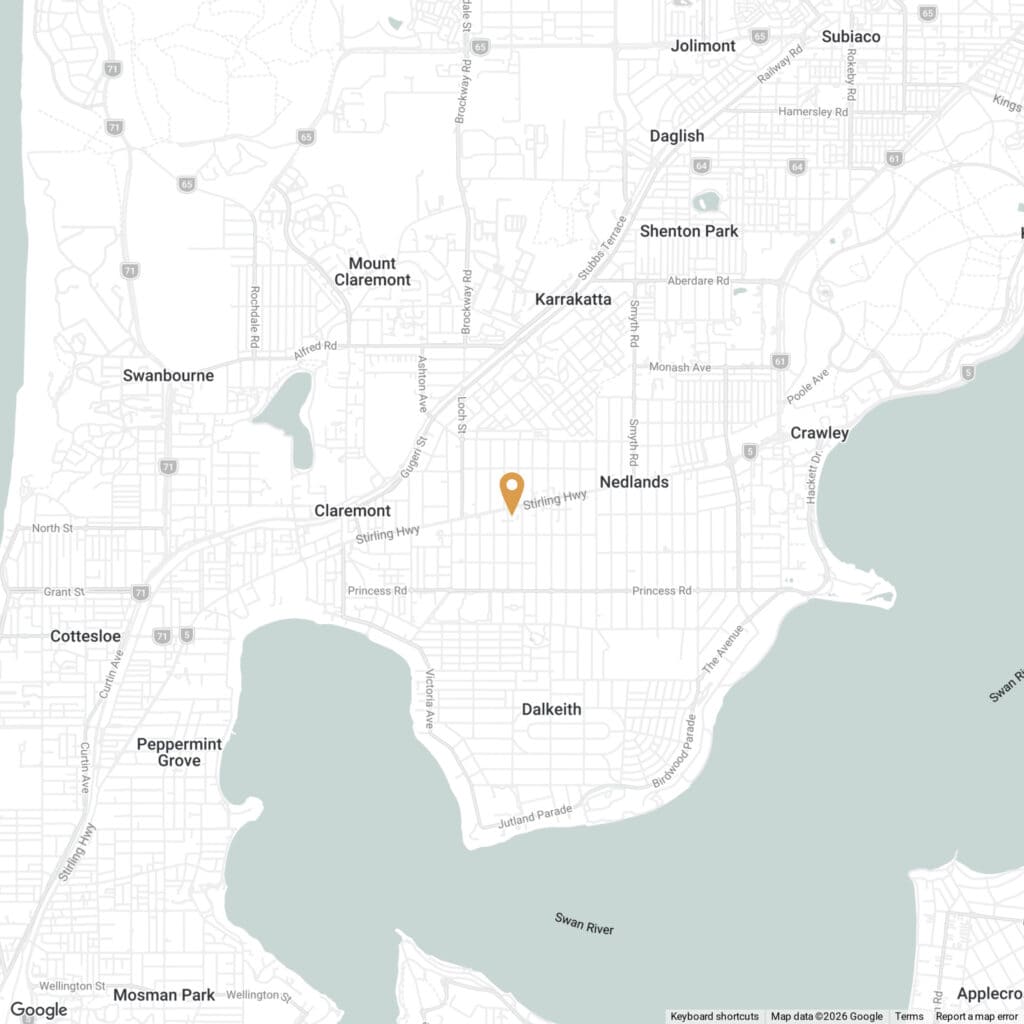
The best way to begin is to visit our showroom in Nedlands. You can explore hundreds of fabric samples, see finished examples, and often watch work happening in the attached workroom. Annie or a member of the team is always happy to talk through possibilities and answer questions.
Alternatively, we can arrange an in-home consultation at a time that suits you. This has the advantage of enabling us to consider your actual windows and provide advice on the best window dressings for your space.
Either way, you will receive honest, expert guidance focused entirely on what is right for your windows and your home.
We look forward to helping you create window furnishings you will love for many years to come.
An Austrian blind gathers into scalloped swags toward the bottom while remaining relatively flat down its length. A festoon blind is ruched the full height for an even more opulent, cascading effect and uses considerably more fabric. Both are rare skills — Hay Interiors makes both.
Very few — they require specialist skill in fabric manipulation, proportion and hand-finishing. Annie’s traditional training in England and her heritage experience make this one of our distinctive offerings.
Silks, velvets, fine linens and damasks all gather and drape beautifully. The right fabric is critical to the success of the treatment — Annie advises on suitability and sourcing during your consultation, including specialist heritage fabrics for period properties.