

A soft Roman blind is made without the rigid rods that hold a classic Roman’s folds in place. Lowered, it sits essentially flat — close to a classic Roman in appearance. The difference shows as it rises: with no rods to hold the line, the fabric gathers into soft rounded loops rather than crisp horizontal folds.
At Hay Interiors we make soft Romans in our Nedlands workroom from quality curtain fabrics that drape beautifully, letting the fabric express its natural movement while still controlling light and privacy. Because we use real curtain fabrics — not roller-blind material — the folds fall softly and hold their shape well over time.
Annie frequently suggests soft Romans for clients who love the idea of a Roman blind but want a gentler aesthetic than the crisp classic fold. The style suits:
Linens, cottons, textured weaves and lighter velvets all drape softly into lovely folds. Heavier or structured fabrics tend to suit the classic Roman better — Annie advises on suitability during your consultation.
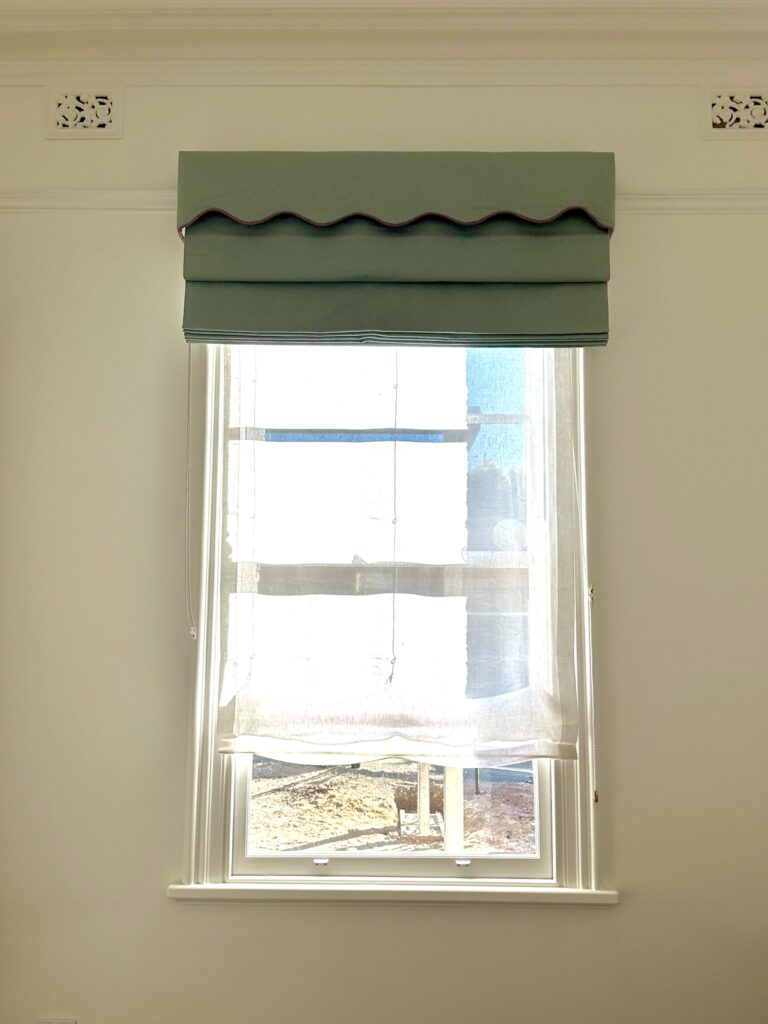
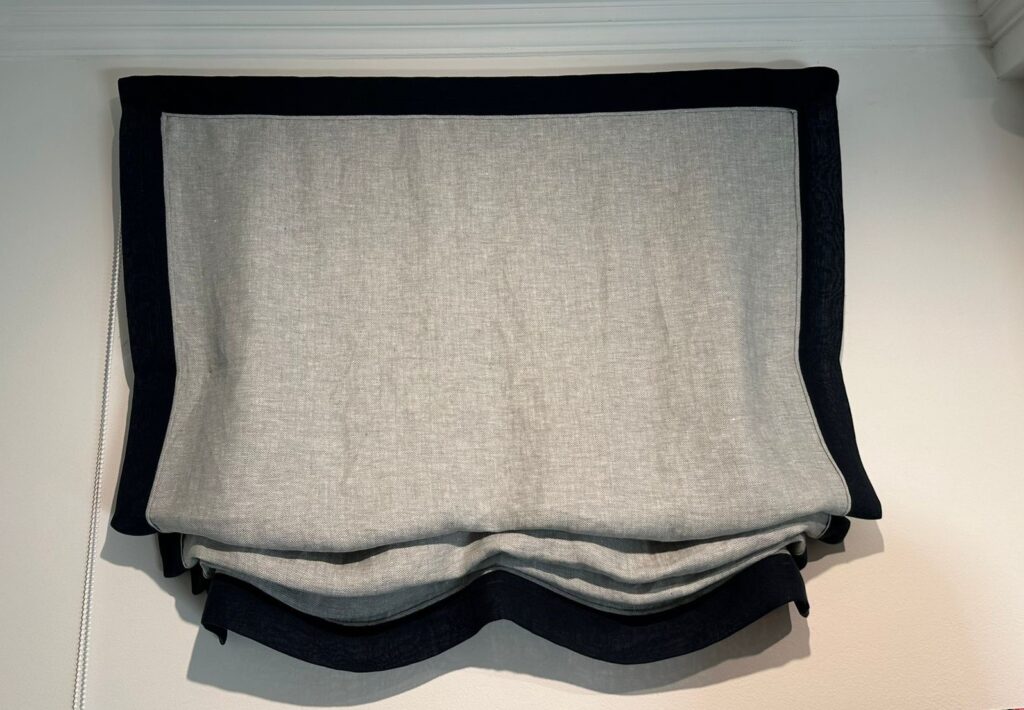
The soft Roman sits between the classic Roman and the relaxed Roman in terms of character. Because the lowered appearance is close to a classic Roman, the choice between the two comes down to how the blind looks in use. A classic gives crisp, architectural folds as it rises; a soft Roman gives rounded, relaxed ones. If the blind will spend most of its life fully down, a classic is usually the more practical choice — and Annie will say so.
A relaxed Roman is different again: it carries a permanent swag along the hem that shows even when fully lowered, where a soft Roman does not.
That conversation is worth an example. In a North Perth heritage home this year, Annie recommended a classic Roman for the structure it would give two windows sitting side by side. The client wanted the softer line, and said so clearly. The blinds were made soft, lined in blockout, and the client is delighted with them. Advice is what a consultation is for; the decision is always yours.
Light-filtering or blockout linings can be added to a soft Roman without affecting its gentle appearance — making it as practical as it is beautiful. With a blockout lining it suits bedrooms perfectly; with light-filtering it works well in living areas where you want warmth and softness alongside useful privacy. The style also works well in motorised versions, and coordinates naturally with sheer curtains and blockout curtains as part of a layered window scheme. Because everything is made in our workroom, fabric and lining choices are wide, and Annie guides you through what will look and perform best for each window.
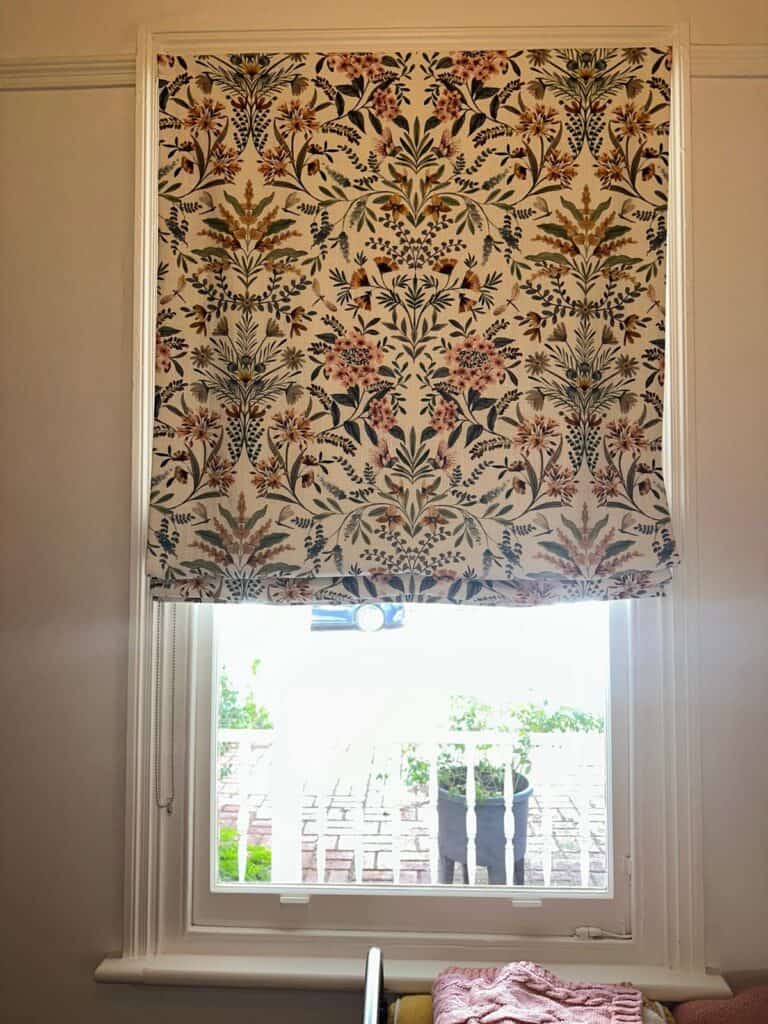
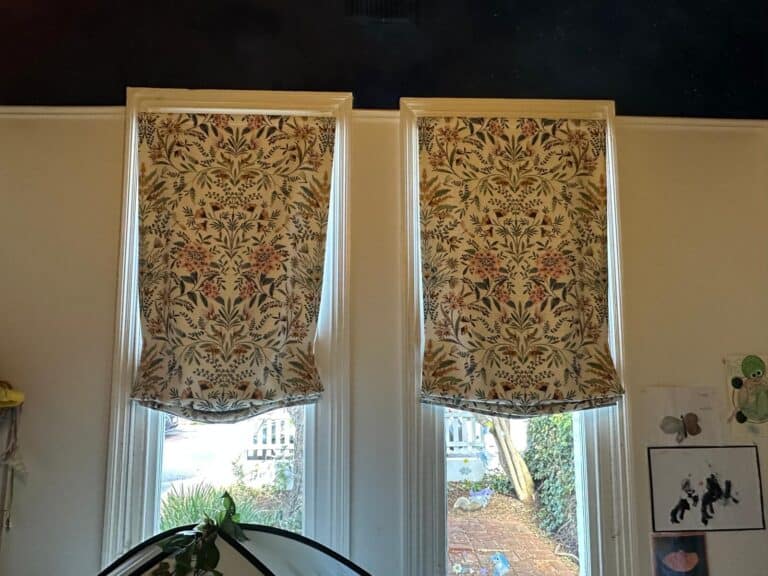
The blinds below were made for a child’s bedroom in a heritage home in North Perth, with Slender Morris fabric, lined in blockout. Soft Romans are often left unlined, which is part of why they hang so freely – but an unlined blind was never going to work in a room that needed to be dark. Lining a soft Roman in blockout gives the room genuine darkness without turning the blind into something structured.
One characteristic worth knowing before you choose the style. Partly raised, a soft Roman draws in slightly at the sides towards the bottom, which is what gives it the relaxed line people want. Fully lowered it sits flat and square to the window. Neither is a fault; it is what makes a soft Roman soft, and it is the reason we would rather show you one part-raised than only in a photograph taken with the blind fully down.

The best way to begin is to visit our showroom in Nedlands. You can explore hundreds of fabric samples, see finished examples, and often watch work happening in the attached workroom. Annie or a member of the team is always happy to talk through possibilities and answer questions.
Alternatively, we can arrange an in-home consultation at a time that suits you. This has the advantage of enabling us to consider your actual windows and provide advice on the best window dressings for your space.
Either way, you will receive honest, expert guidance focused entirely on what is right for your windows and your home.
We look forward to helping you create window furnishings you will love for many years to come.
A classic Roman uses horizontal rods in the back to create crisp, flat folds. A soft Roman leaves them out so the fabric falls in gentle, rounded folds the full width of the blind — a warmer, less structured look that suits relaxed and contemporary interiors.
Yes. With the right lining — light-filtering or blockout — a soft Roman gives the same light control as other Roman styles, just with a softer appearance. Annie advises on the right lining for each room.
Linens, cottons, textured weaves and lighter velvets drape beautifully into soft folds. Heavier or stiffer fabrics tend to suit the classic Roman better. Annie assesses fabric suitability as part of your consultation.
Yes, with a blockout lining. Soft Romans are often made unlined, which is part of what gives them their free, relaxed fall – but that will not darken a bedroom. Lined in blockout, a soft Roman gives the same darkness as any other Roman while keeping the soft rounded fold. We recently made a pair this way for a child’s bedroom in North Perth.