

“Regardless of whether these appeal to you personally, I hope you’ll agree they’re a truly unique window covering — it borders on being an art piece. Very few curtain shops in Perth can make festoon blinds, so most people have never heard of them.” — Annie
Festoon blinds originated in France and Germany in the eighteenth century and remain popular across Europe — which is where Annie first started making them. She trained in Southampton, England, and her early workroom career included creating window treatments for heritage properties such as Bagshot Park. Very few Perth shops can execute this style; ours is made the way it was taught to her.
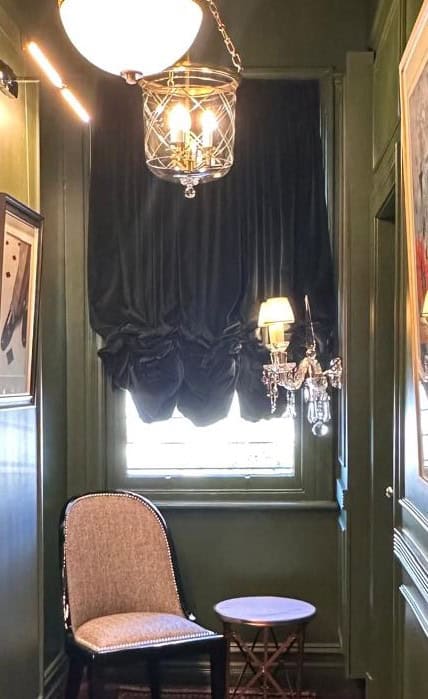
Festoon blinds are best suited to formal, heritage and special spaces where a window treatment is meant to be celebrated rather than merely functional. That said, as illustrated in this picture, they can also be used in other areas.
They do however work particularly well in:
They are less suited to casual or minimalist contemporary homes, where a tailored Roman blind or clean roller would serve better. See our period home curtains page for more on our period-home speciality, and our Austrian blinds and London blinds pages for related decorative styles at different levels of formality.

Festoon blinds use considerably more fabric than any other blind style — the full-height gathering means the fabric quantity is substantial, and choosing the right material is critical. Silks, velvets, fine linens and soft damasks all gather into magnificent, rounded swags. The wrong fabric — too stiff, too light or poorly weighted — won’t gather correctly regardless of the making quality. Explore our curtain fabrics library for the range Annie draws on, including specialist heritage fabrics through suppliers such as Slender Morris for period properties.
Construction is meticulous — careful attention to gather ratios, scallop proportions and overall balance ensures the blind looks magnificent rather than overwhelming. Because we make them in our Nedlands workroom, every detail is controlled from the initial pattern through to the final dressing at installation. Linings for light control can be incorporated where appropriate.
Motorisation is possible and can be integrated with a home automation system. It is worth considering on a tall or awkwardly placed window, where operating cords are more conspicuous against a gathered blind than a flat one.
Festoon blinds are the most opulent of a family of decorative treatments that Hay Interiors specialises in. If the festoon’s grandeur is slightly more than your room warrants, Annie may suggest Austrian blinds (gathered toward the base rather than the full height, for a slightly more restrained opulence) or London blinds (soft gathers on a Roman structure, elegant but less formal). For traditional curtain treatments that complement festoon blinds beautifully — and complete a period room — see swags & tails and pelmets. Together these styles define the formal, heritage end of our range, and they’re where Annie’s English training and workroom capability show most clearly.
Interior designers specifying a festoon for a client can work directly with our workroom on fabric, gather ratios and hardware — see our for interior designers page.
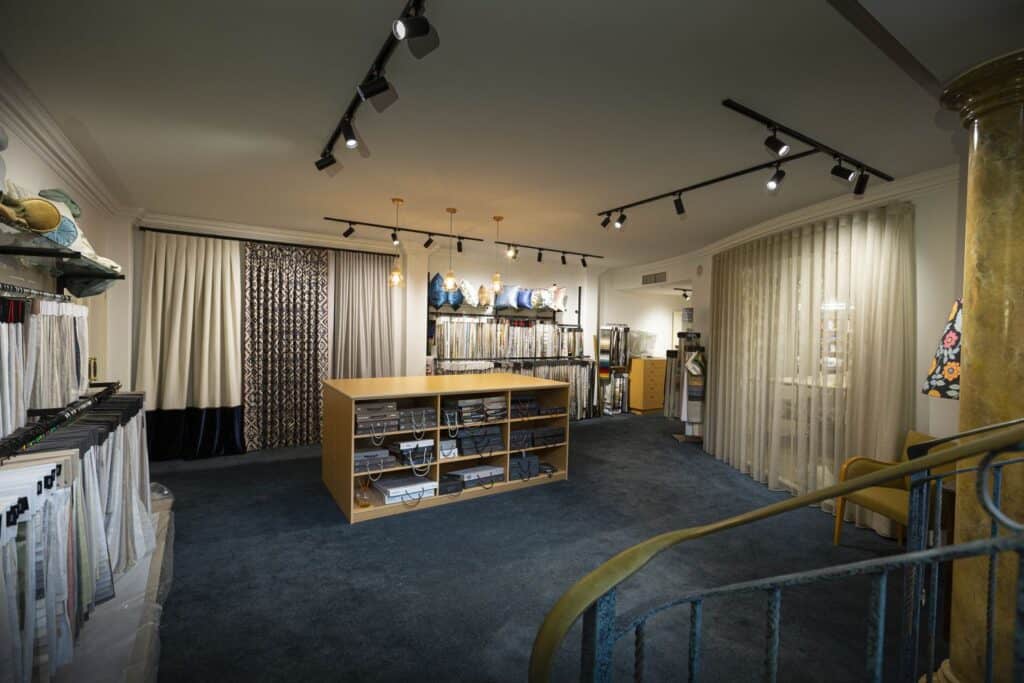
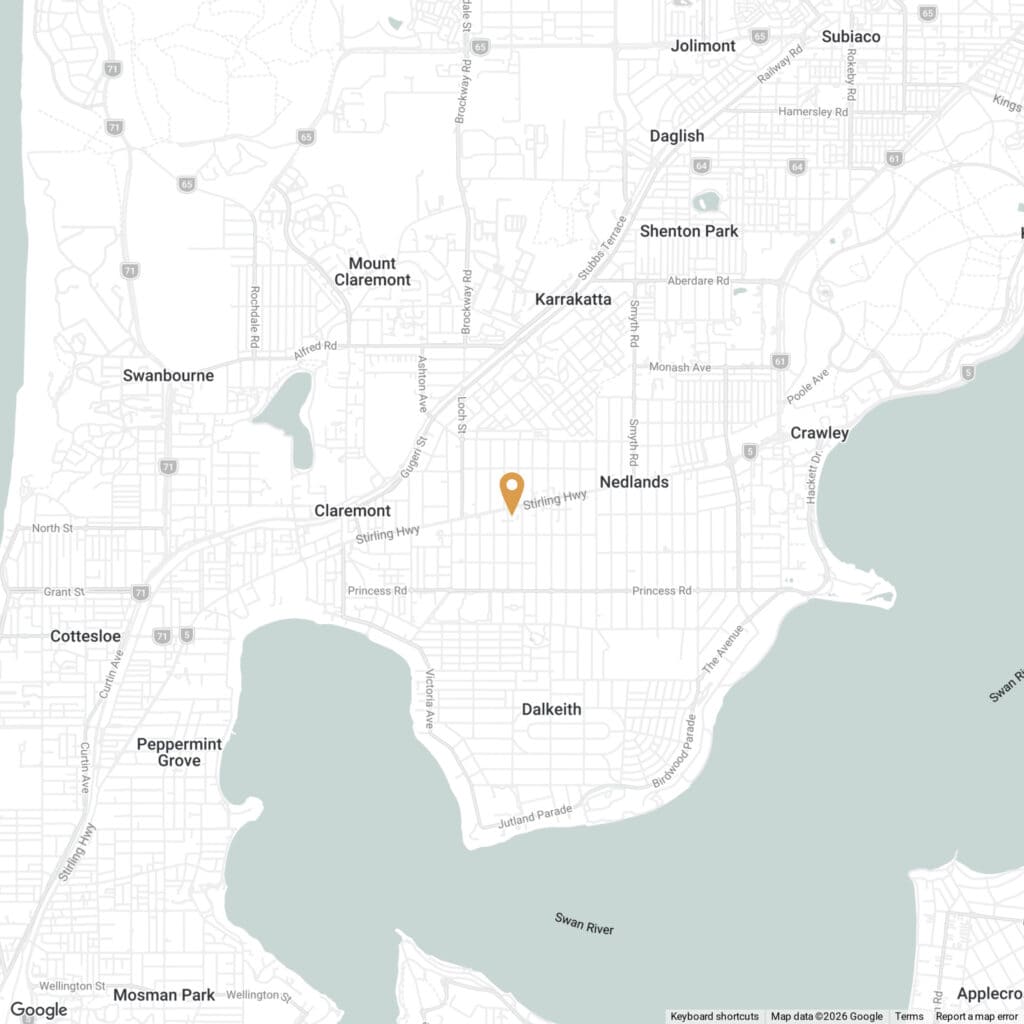
The best way to begin is to visit our showroom in Nedlands. You can explore hundreds of fabric samples in natural light, see finished examples, and often watch work happening in the attached workroom. Annie or a member of the team is always happy to talk through possibilities and answer questions.
Alternatively, we can arrange an in-home consultation at a time that suits you. This has the advantage of enabling us to consider your actual windows and provide advice on the best window dressings for your space.
Either way, you will receive honest, expert guidance focused entirely on what is right for your windows and your home.
We look forward to helping you create window furnishings you will love for many years to come.
A festoon blind is gathered along its full height so it forms soft, rounded swags of fabric, keeping that gathered, opulent character whether raised or lowered. It is the most decorative of all fabric blind styles.
Very few makers offer them. Hay Interiors makes festoon blinds by hand in our Nedlands workroom, drawing on Annie’s traditional training in England and her heritage experience with period properties.
Silks, velvets, fine linens and soft damasks all gather beautifully. Fabric choice is critical to the success of the treatment — Annie advises on suitability and sourcing during your consultation, including specialist heritage fabrics for period properties.