

For interior designers, a good curtain workroom is a quiet asset — the partner who turns a specification into something beautifully made, on time, without drama. For interior designers, a good curtain workroom is a quiet asset — the partner who turns a specification into something beautifully made, on time, without drama.
Hay Interiors has worked with Perth’s design community for two decades — our two longest designer relationships run to eighteen and fifteen years. Annie understands that your reputation rides on every project. You deal directly with the maker, not a salesperson, so nothing is lost between the brief and the finished blind.
“For the past 18 years I have worked exclusively with Annie for all my clients’ drapery needs — commercial and residential, single rooms through to entire buildings.“
— Perth interior designer, 20 years in practice
Earlier this year Hay Interiors was invited to propose window dressings for a suite at Parliament House in Perth. The brief asked for a design that would make the rooms feel lighter, brighter, more inviting and more cohesive, while respecting the heritage architecture. Annie submitted a proposal and design, and it was accepted.
The interesting part was that those two requirements pull against each other. The conventional answer at a heritage window of that height is a pelmet or swags and tails, both of which weight the top of the opening and take light out of the room. Annie proposed a hand painted rod instead, leaving the head of the window open, and kept the traditional detail where it belonged – a triple pinch pleat at two and a half times the track width, with the heading made deeper than standard because the curtains are tall.
It is a useful illustration of what she brings to a scheme. Not a preference for traditional or contemporary, but a judgement about which elements a particular room needs and which it is better without. See Heritage Curtains for more period work.
Annie can advise on the most suitable curtains and blinds at the design stage, working from architectural drawings before a window physically exists. Getting the window treatment right on paper — proportion, heading, stack, track type, motorisation provisions — saves costly changes later and keeps your scheme coherent. It’s the kind of upfront, technical input a retail showroom simply cannot provide.
“I consistently receive excellent upfront advice from Annie, which greatly assists in guiding design and specification decisions. She always anticipates potential issues while offering effective solutions.“
— Director, Perth interior design practice, 15 years working with Hay Interiors
We work with designers in whatever way suits your practice — whether you supply your own fabrics and manage the client relationship directly, or prefer a trade arrangement on work we coordinate. Annie is happy to structure each project to fit how you run your business, and to keep the commercial details straightforward and discreet.
We understand that your supplier relationships are part of your practice, not ours to publicise. We do not name the designers we work with, and we would never approach your clients.
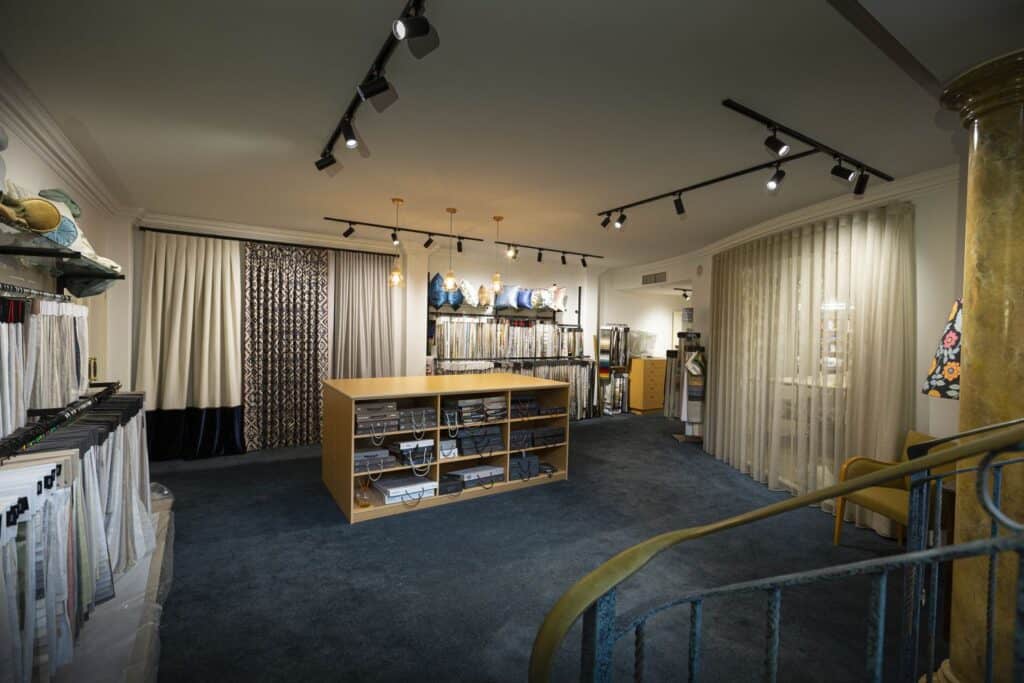
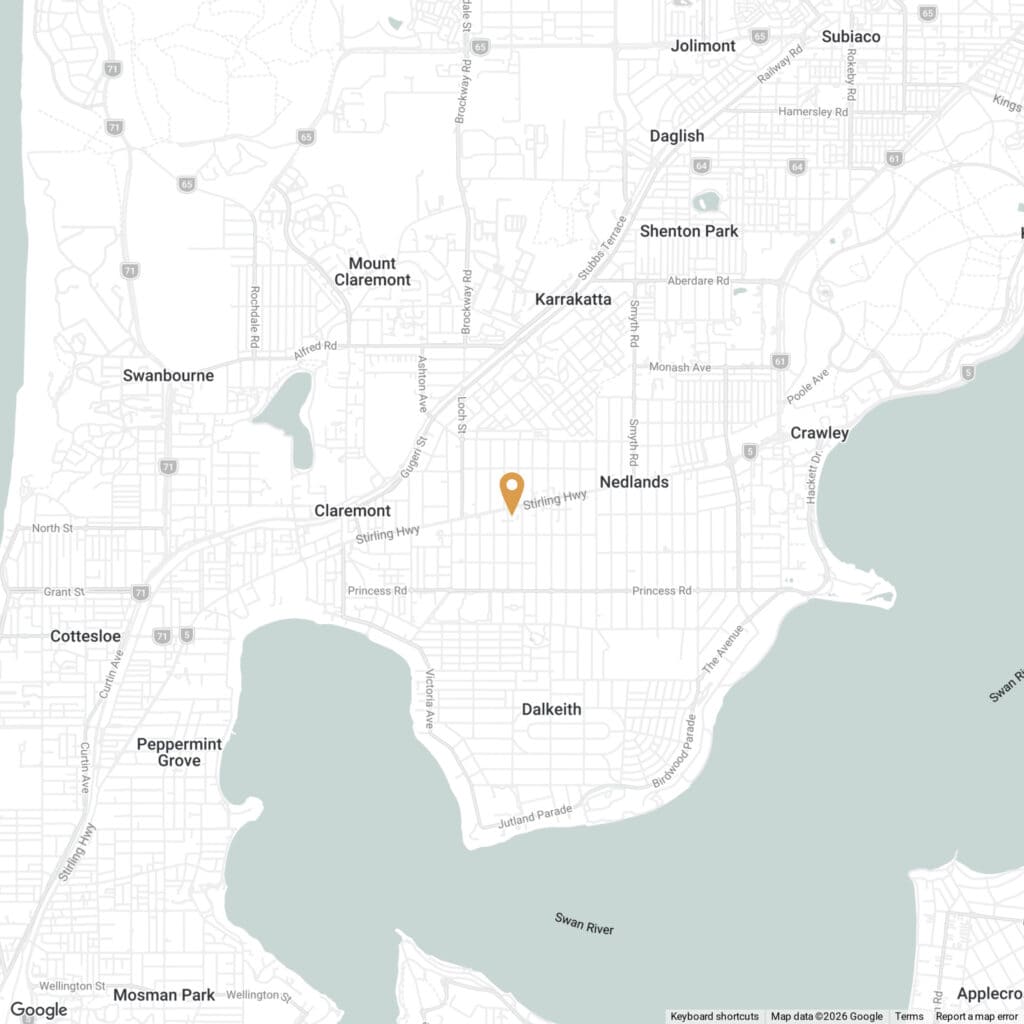
Everything is made in our own Nedlands workroom rather than ordered in. For a designer that matters most when something needs adjusting: there is no supplier to chase, no reorder, and no explaining the problem twice. The person who made it is on site.
“As Hay Interiors design and manufacture their curtains in-house, this ensures exceptional quality control and guarantees that my clients receive exactly what was discussed — and that anything that does come to light is resolved easily and quickly.“
— Perth interior designer, 20 years in practice
Because we’re not tied to a single brand, we can work across the trade — including distributors such as Decor Design Centre, Tessuti Mood and Zepel, alongside dependable ranges like Warwick, Nettex and Charles Parsons — and specialist heritage sources including Slender Morris. If you have a specific fabric or scheme in mind, Annie will work to it; if you’d like recommendations, she’ll bring genuine making knowledge to the selection.
In most projects the main timing factor is fabric delivery rather than the making itself. Engaging Annie early — even at the drawing stage — lets fabric be ordered in good time and keeps installation on schedule. She’ll always give you an honest lead time up front so you can plan client handovers with confidence.
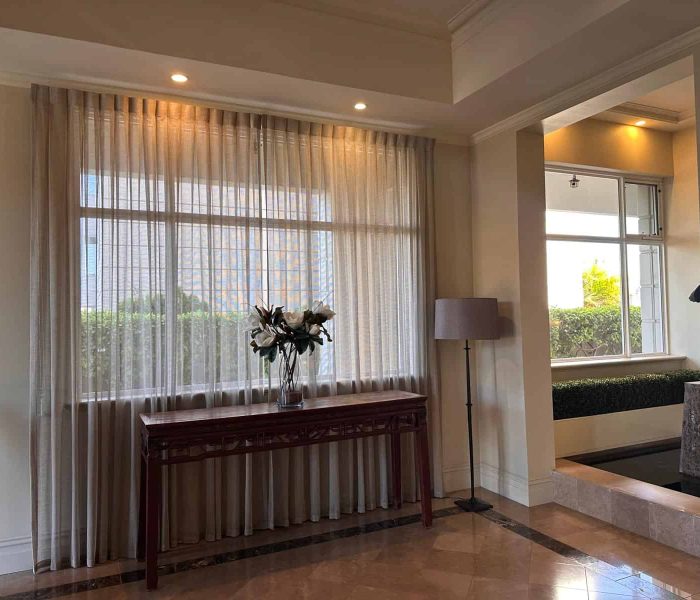
For architects, the value of involving a curtain workroom early is less about fabric and more about provisions. Ceiling recesses for concealed tracks, pelmet boxes that sit correctly within the cornice detail, power provisions for motorised curtains run before plastering, and stack-back allowances that keep glazing clear when curtains are open — these decisions are easy on the drawing board and costly to retrofit.
Annie is comfortable reading architectural drawings and advising at documentation stage, so window treatments are integrated into the design rather than applied to it afterwards. On new builds and significant renovations, a short conversation at design stage routinely saves clients thousands in avoided rework — and produces a cleaner architectural result, with tracks recessed, hardware concealed and proportions respected. Whether the project then flows through an interior designer, the builder or the client directly, the provisions are right from the start.
The most useful first meeting is usually in the workroom. You can see how the blinds are built rather than take our word for it, go through the fabric library, and talk through a live project or one still at drawing stage.
Annie will tell you honestly what a treatment will look like when it is made, what a fabric will do at the size you are proposing, and where a specification will cause trouble on site. If something in your scheme will not work, you will hear it at the meeting rather than at installation.
If it is easier, she will come to you, or to the site.
Yes. We offer flexible arrangements — you can hold the client relationship, or we can coordinate the work on trade terms. Annie tailors the arrangement to how your practice operates.
Yes — Annie can specify suitable curtains and blinds from drawings at the design stage, which helps avoid costly changes and keeps the scheme consistent.
Lead times are driven mainly by fabric delivery rather than the making. Engaging early, even at the drawing stage, keeps projects on schedule, and Annie provides an honest timeline up front.
We install. The same team that measures and makes also fits, so there is no handover in the middle where responsibility becomes unclear. On a site with a builder or other trades involved, Annie will coordinate timing directly rather than leaving it with you.
Not unless you ask us to. We know that where you have your curtains made is part of how your practice competes, and we treat it as yours to disclose rather than ours.