
A maker’s guide to choosing for every room — from a Perth workroom that sells both, so we have no side to take.
You’re standing in a room with bare windows, and everyone you ask gives you a different answer. The blinds company says blinds. The curtain shop says curtains. Here’s our advantage: at Hay Interiors we sell both, and sew curtains and Roman blinds in our own Nedlands workroom — so we have no horse in this race. The honest answer is that it depends on the room: how it’s used, how the light behaves, and what you want the window to do for the space. This guide walks through it the way Annie does in a consultation — room by room, with the trade-offs laid out straight.
Choose curtains when you want softness, warmth and scale — they suit living rooms, bedrooms and any generous window, and they insulate and quieten a room in ways no blind can match. Choose blinds when you want clean lines, precise light control or a treatment that shrugs off moisture — kitchens, bathrooms and compact spaces are their natural home. And in many rooms, the best answer is both: a practical blind layered behind a beautiful curtain. The rest of this guide takes it room by room.
Curtains bring qualities to a room that nothing else can. Fabric falling in full folds softens hard architecture, absorbs sound, and holds warmth against the glass in winter — a properly lined curtain is one of the most effective forms of window insulation there is. They carry scale effortlessly: on a large window or under a high ceiling, custom made curtains create presence where a blind can look lost.
Their real superpower, though, is fabric. From barely-there sheer curtains that filter Perth’s hard light into something gentle, through linen curtains and cottons to deep velvets, the fabric you choose sets the temperature of the whole room — colour, texture and mood in one decision. That range simply doesn’t exist in any blind catalogue.
The trade-offs are honest ones: curtains need wall space either side to stack back into, they’re a bigger investment than entry-level blinds, and they don’t belong anywhere steam and cooking splatter live.
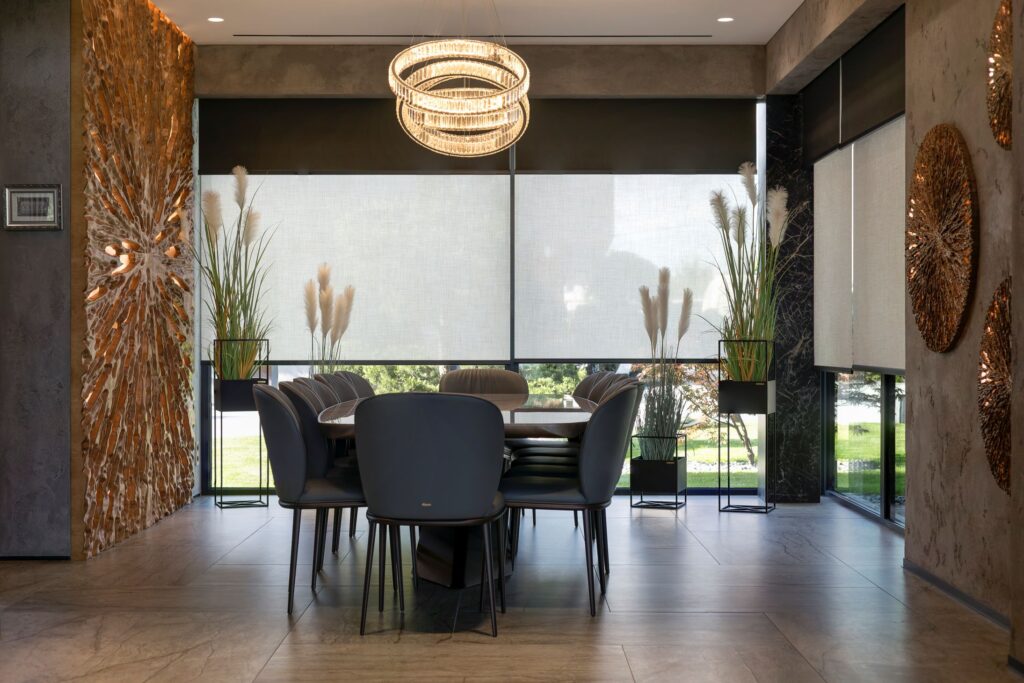
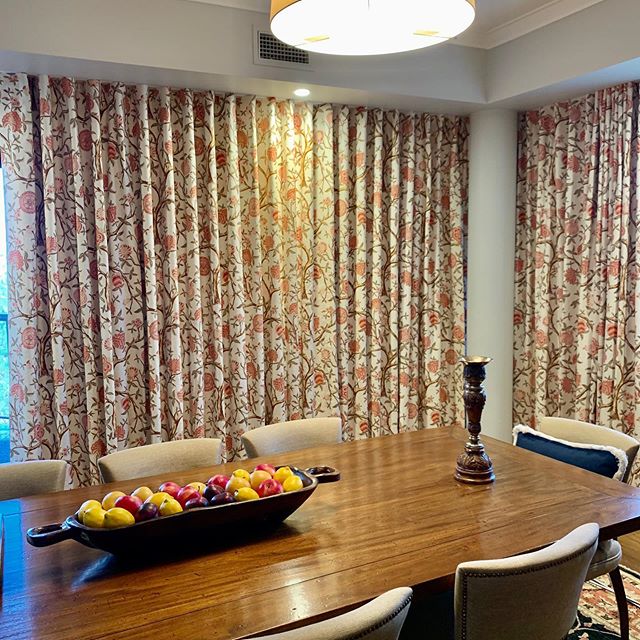
Usually curtains — this is the room where softness, scale and a bit of drama pay off most, and where you’ll feel the acoustic difference fabric makes. Layering a sheer for daytime with a heavier curtain or blind for evening gives the most flexible result. If the look you want is crisp and minimal, full-height s-fold sheers walk the line beautifully. If noise is part of why you are looking, soundproof curtains can be considered.
Either works — what matters is blockout. The most refined result is a layered curtain treatment: sheer for privacy and filtered morning light, blockout curtain for sleep. Where space is tight, a double roller blind delivers similar control in a fraction of the depth. Decide how dark you genuinely want 6am to be, and work backwards from there.
Usually blinds. Steam, grease and the general business of cooking are hard on fabric, and windows over benches and sinks need treatments that sit clear of taps and splashback. A wipeable roller or a crisp Roman blind in a practical fabric is the sensible default — though a cafe curtain on a casual window can still charm in the right kitchen.
Glare is the enemy. A sunscreen roller blind keeps your screen readable and your view intact; a light-filtering Roman blind does the same with more warmth if the room doubles as something other than work.
Big glass is where curtains reclaim the advantage. A curtain on a track – particularly a wave-style s-fold – travels the full span gracefully and stacks away clean, where multiple blinds across a wide opening mean gaps, cords and visual clutter.
Half the consultations Annie does end with neither answer but both. Layering — a practical blind at the glass with a curtain in front — gives each element the job it’s best at: the blind handles light control and privacy with precision, the curtain brings softness, insulation and the finished look. The modern default is a sheer curtain over a blockout roller; the traditional version pairs drapery with a Roman. A double roller blind even layers within itself — sunscreen and blockout on one bracket. Finish the window with a pelmet and the whole treatment reads as one considered piece rather than two competing ones.
If you’re torn between curtains and blinds, it’s usually a sign the room wants both.
Since we sell everything on this page, we can be straight about money. Blinds are generally the entry-friendlier path — a quality roller blind costs less than a made-to-measure curtain, and always will. But the comparison narrows quickly: a properly sewn Roman blind in a beautiful fabric sits closer to curtain territory than roller territory, and cheap curtains are a false economy that quality blinds simply aren’t. The way we’d frame it: buy blinds where practicality leads, invest in curtains where the room will repay them for fifteen years or more, and never judge either by the ready-made versions. The real numbers depend on your windows and your fabric — which is exactly what a measure and quote settles.
After more than twenty years of Perth consultations, Annie’s shortcut is this: dress the rooms you live in, blind the rooms you work in — and when you can’t decide, the window is probably asking for both.
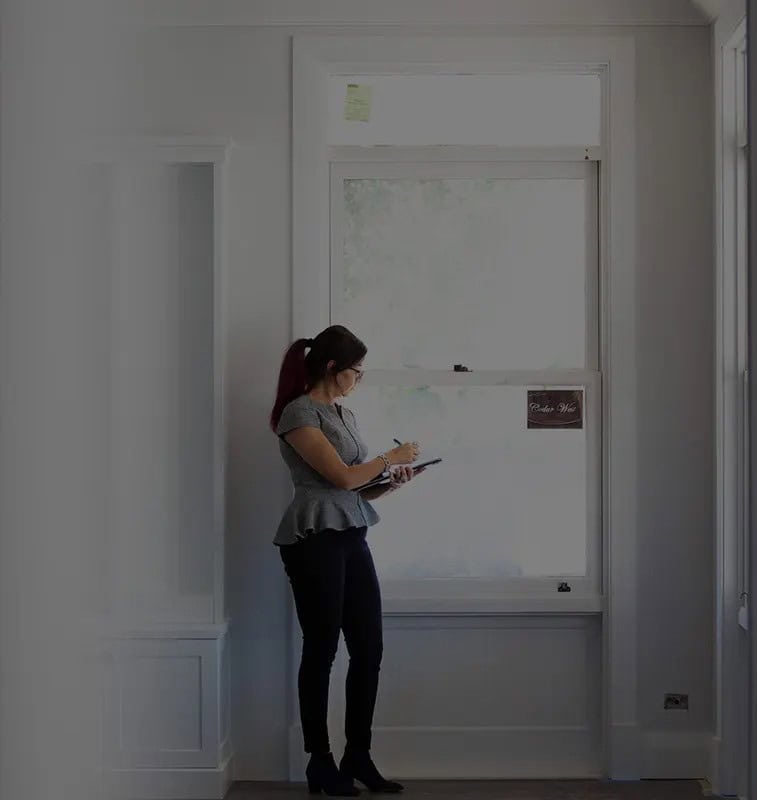
The genuine answer to “curtains or blinds?” lives in your actual room — its light, its proportions, how you use it at 7am and 7pm. That’s why consultations are free and come to you: Annie will stand at your windows, tell you straight which way she’d go, and show you samples in your own light. She fits curtains and blinds in Perth homes every week, and the same window facing north in Floreat and facing east in Mount Hawthorn will get two different answers. No obligation, and no bias toward either — we sell both.
Either can work — blockout capability is what matters most. A layered treatment of sheer and blockout curtains gives the most refined result, while a double roller blind achieves similar light control in far less space. It comes down to the room’s proportions and how dark you want your mornings.
Yes — layering is often the best answer of all. A practical blind at the glass handles light and privacy, while the curtain in front brings softness and a finished look. A sheer curtain over a blockout roller is one of the most popular combinations we make.
Generally yes at entry level — a quality roller blind costs less than made-to-measure curtains. But sewn Roman blinds in premium fabric can approach curtain pricing, so the honest comparison is per window and per fabric, which is what a free measure and quote settles.
Well-made curtains in quality fabric routinely serve fifteen years or more, often outliving several rounds of ready-made alternatives. Blind longevity depends mostly on mechanism quality. In both cases, custom-made significantly outlasts off-the-shelf.